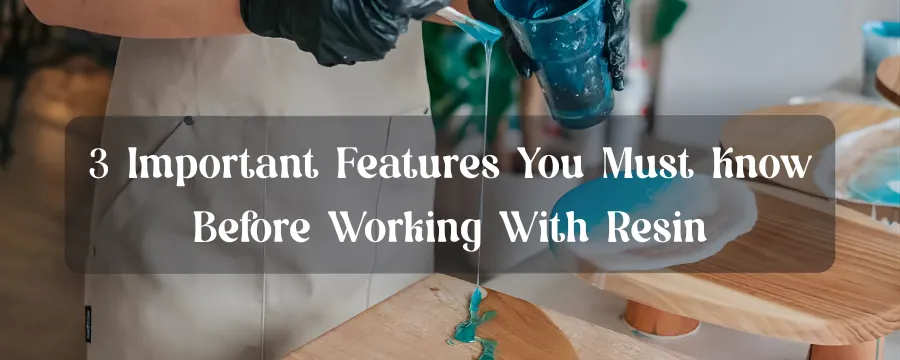
The 3 Major Features You Need to Know Working with Resin.
Epoxy resin is now one of the most versatile and thrilling art and TI material in the world of art, DIY, furniture making, flooring, and crafts. Resin provides both durability and aesthetic appeal as well as unlimited design potential; with glossy river tables and jewellery made of resin; resin is glossy and as a result, offers smooth surfaces to flooring; and ornaments.
Nevertheless, resin is not as easy to work with as mixing and pouring. Poor curing, bubbles, yellowing or surface defects are some of the problems that many beginners experience not due to the difficulty of resin, but due to the lack of understanding of the main characteristics of this material.
It is necessary to know how epoxy resin will act and what will affect the end outcome before you begin your next resin project. This blog will discuss three of the most critical properties to be familiar with when using resin so that you can use the material to produce high-quality work without making the most frequent errors.

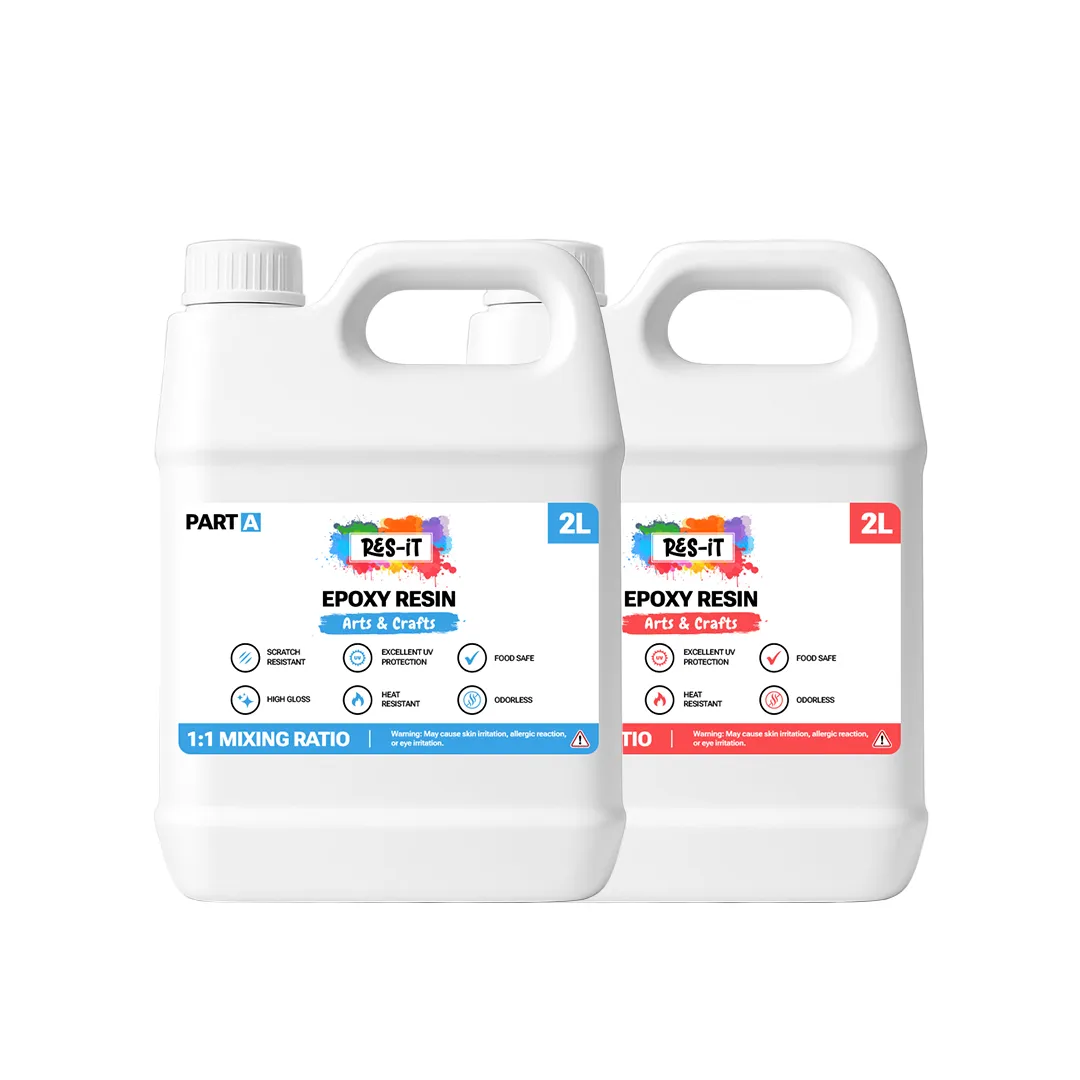

1. Mixing Ratio & Curing Time: The Basis of any Resin Project.
The mixing ratio and curing of epoxy resin is one of the most important characteristics of the resin. Each epoxy system is to be used with a certain ratio of resin to hardener, and its slight deviation may cause significant issues.
Why the Mixing Ratio Matters
The resin and hardener react to produce epoxy resin which is cured. If the ratio is incorrect:
- The resin can either be sticky or soft.
- The surface does not necessarily harden well.
- There will be a loss of strength and durability.
- Finish can either be hazy or bumpy.
As an example, the majority of common epoxy resins involve a 1:1 or 2:1 volume proportions of epoxy resin and epoxy hardener, however, this varies across different products. It is always advisable to do as the manufacturer says- there is no place of guess work in resin work.
An insight into Pot Life and Working Time.
The time that you have to work with mixed resin before it starts thickening and heating is known as pot life. Some resins offer:
- Short life (quick-drying, good when small projects are involved)
- Long pot life (good with deep pours and tabletops, river tables, etc.)
It is important to select the appropriate resin in your work. A slow curing resin, such as deep-pour resin, is used to avoid overheating, and a rapid curing resin, e.g. coating resin, is used to form thin layers.
Tip for Best Results
- Graduated cups are to be used to measure.
- Blend on low speed 3-5minutes, scraping sides and bottom.
- Let the mixture rest a little to minimize the number of bubbles then pour.
Knowledge on curing time and ratios is the initial step to resin perfection.
2. Sensitivity of Temperature and Environmental Conditions.
The sensitivity of the epoxy resin to the temperature and environment is another significant characteristic of epoxy resin. The reaction of resin varies based on the conditions in which the resin is mixed, poured and cured.
Optimistic Work temperature of Resin.
The majority of epoxy resins are most effective at 20-25 o C (68-77 o F). Outside this range, one may have problems as:
- Delayed or retarded curing in cold weather.
- Overbubbles and overcuring in high temperature.
- Irregularities or depressions.
Cold resin turns thick and hard to mix whereas hot conditions may reduce the working time significantly.
Humidity & Moisture Effects
High humidity can lead to:
- Cloudy or milky finishes
- Blushing on the surface (waxiness or greasiness)
- Inadequate interfaces between layers.
This becomes particularly vital in cases of flooring and table top projects where clarity and strength are a vital requirement.
The way to manage the Environment.
- Rinse resin in warm water prior to usage (Do not over heat)
- Labor in a well-ventilated and dust-free place of work.
- Pouring resin in cool and moist weather should be avoided.
- Turn on heaters or dehumidifiers when required.
Environmental control may be considered a trifle, however, it contributes significantly to the attainment of a crystal-clear professional finish.
3. Limits of Safety, Compatibility and use.
Epoxy resin is not hazardous but it is a chemical material and needs to be handled with caution and care.
Safety First
The use of resin: It is always recommended to work with resin with consideration of safety:
- Use nitrile gloves to cover up your skin.
- Splashes can be prevented using safety glasses.
- Operation in a well-ventilated place.
- No direct skin contact and inhalation of the fumes.
Even though new epoxy systems contain low amounts of VOCs, it is important to ventilate the work area; particularly when an epoxy system is used to do floors indoors or during large scale pours.
Material Compatibility
Resin does not react with all materials. Some surfaces may:
- Extraction of confined air, which results in bubbles.
- Absorb resin unevenly
- Inhibit curing
Typical materials which can be used compatibly are:
- Wood (sealed beforehand)
- Silicone moulds
- Metal
- Stone
- Concrete (properly prepared)
The use of materials such as untreated MDF, damp wood or some plastics might need testing or sealing before use.
Pour Depth Limits and Application Limits.
Each resin has a limit to the pour depth. Taking this limit beyond its limits can lead to:
- Overheating
- Cracking
- Yellowing
- Internal bubbles
For example:
- The deep-pour resin is used in thick layers.
- Resin coating is not supposed to be done in large amounts.
The knowledge of your resin limits will guarantee durability, clarity and performance.
Final Thoughts
Epoxy resin is a very gratifying substance, and achievement is in being aware of the main characteristics before embarking. By mastering:
- Curing time and ratios of mix.
- Environmental regulation and temperature.
- Limitations on safety, compatibility and use.
you will be able to prevent frequent errors and will turn your resin projects to the amateur level to the professional one.
Regardless of what you are producing, resin art, resin furniture, jewellery or resin flooring, the difference between high-quality resin and best practices is the difference between success and failure. At Res-iT, we are sure that the appropriate knowledge combined with the appropriate materials will result in excellent outcomes- each and every time.
You are about to begin with your second resin work? Ensure that these three features are included in your process and you will be in a position to succeed.