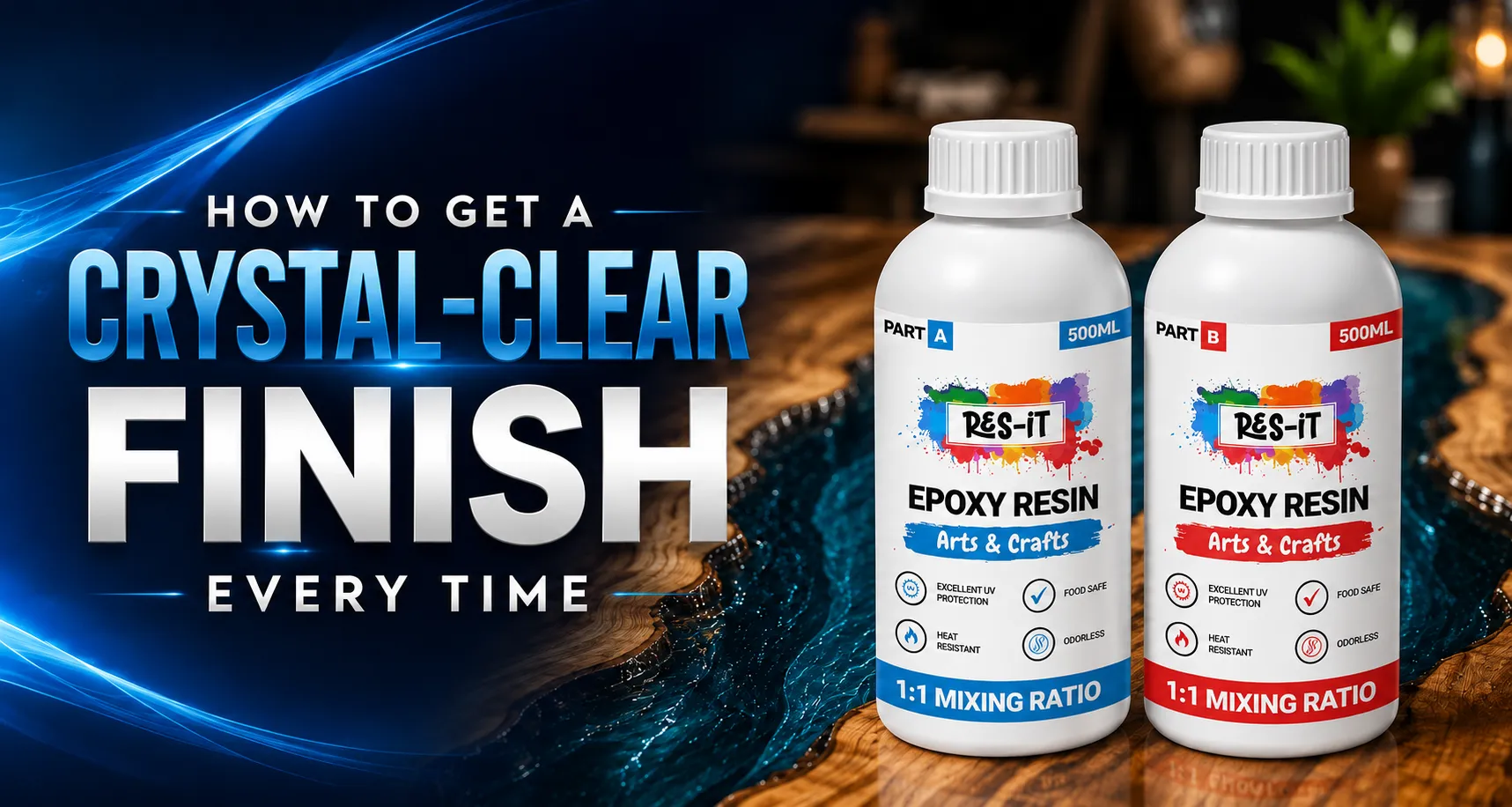
How to Get a Crystal-Clear Finish Every Time
In the case of resin art, it cannot be better than making it glassy-like to touch to find that smoothness. When creating jewellery or coating wood or even creating a table, the secret of it all really lies in how well you polish and finish epoxy resin. Among other things, you will know how to polish resin enough to be shiny without the use of polish agents, how to sand it without scratches, and what polishing agents can provide the perfect mirror finish each time.


Why Self-Levelling Epoxy Makes a Difference
A high-quality self-levelling epoxy resin spreads evenly across the surface without leaving ridges, brush marks, or uneven patches. This creates a naturally smooth, glass-like finish while reducing the amount of sanding and polishing required after curing. Whether you're coating wood, creating resin artwork, or making jewellery, a self-levelling formula helps deliver professional-looking results with less effort.
- Creates an even, flat surface automatically.
- Reduces visible brush and roller marks.
- Helps produce a crystal-clear finish.
- Makes polishing easier after curing.
Step 1: Sand the Surface Smoothly
Before polishing, make sure that your surface of the resin is smooth. Begin with 400- grit sandpaper and then progressively increase up to 3000- grit. How the trick works is to sand resin without scratches, so although the surface needs to be wet, it should not have a lot of friction, or the surface will mark cloudy.
Wipe the sanded surface using soft microfiber cloth so as to remove all the dust and debris. This gives the optimum base to perfect finish.
Step 2: Choose the Right Polishing Compound
The type of epoxy polishing compound you use make a big difference. Polishing Epoxy resin is the most appropriate polish that will be able to eliminate micro-scratches and minuscule scratches that produce clarity.
When you using Res-iT Epoxy Resin 1L Starter Kit, you already have a professional level resin that is cured crystal clear, and this would be great to use in high-gloss polish. After cured, coating with Epoxy Polish and buffing under circular movements to give it the deep reflective look.
Step 3: Epoxy Resin Hand Polishing.
When dealing with smaller projects such as keychains or jewels one would question how they would polish the epoxy new without sanding or tools. Also, it can be polished by hand, simply by using a soft pad. It dose not come easy but it is worth it!
When you want to know how to mend that resin that has sanded out, just put some of your fine polishing compound over on it and buff. Items such as the Res-iT Epoxy Resin Starter Kit 240ml can be used by anyone beginning because they would have that same professional look with some smaller pieces.
Step 4: Seal and Protect the Shine.
After washing and polishing your top, coat it with an aerosol lacquer surface protectant that is made of clear wood or resin. It sets the gloss, boosts colour and keeps off UV. Paint twice and allow to dry in order to have long time shine.
Step 5: Make It Shine Like Glass
Consistency is the secret behind getting that typically shiny look of glass out of the resin that you put onto it or gaining a good clear coating finish. It will require accurate measurement of resin and hardener and pouring a resin in a dust-free environment and allow it to dry completely. When there is a smooth and even flow, this gives a clear coat that is glass-like, desirable by every crafter.
Common Polishing Mistakes to Avoid
| Mistake | How to Avoid It |
|---|---|
| Skipping Wet Sanding | Always wet sand gradually from lower to higher grit paper. |
| Using Too Much Pressure | Buff gently using light, even pressure. |
| Polishing Before Full Cure | Wait until the resin has completely cured. |
| Working in Dusty Conditions | Keep the project covered while curing and polishing. |
| Using Low-Quality Polishing Compound | Use a resin-specific polishing compound for the best shine. |
Where to Buy Epoxy Resin
In need of quality resin which is without complicated work? The Res-iT Epoxy Resin 1L Starter Kit(as well as the Res-iT Epoxy Resin Starter Kit 240ml) is a perfect option but either is beginner-friendly and is known to yield a bubble-free crystal-clear finish. In case, you need to purchase the epoxy resin, go to EpoxyRes-It.
Who Can Benefit from This Technique?
These polishing methods are suitable for beginners, hobbyists, professional resin artists, furniture makers, and DIY enthusiasts. Whether you're restoring the shine on jewellery, polishing a river table, or finishing decorative resin pieces, following the correct sanding and polishing process helps achieve a flawless mirror-like finish.
(FAQs)
Q: How can resin be made shiny without being polished?
A: To shine untinted resin without polishing, an option goes to heat gun with slight reflow of resin surface or scoop of thin coating of clear epoxy resin. This gives it an effect of natural clarity and gloss.
Q: Was it possible to cure epoxy resin without sanding?
A: Yes, for smooth surfaces! Still, a microfibre cloth and a soft epoxy polish should be used to restore the shine. Light sanding with polishing produces the best results with deeper scratches.
Q: What about diamonds that have an appearance similar to glass on resin?
A: To have a clear coat finish to your wood you will need a good quality of epoxy polishing compound and to ensure that your resin will dry out the room must be dust-free. Also adopted is this process, which causes your project to become a coagglomeration of smooth, glossy, glass-like finish.
Professional Tips for Better Results
- Allow the resin to cure completely before sanding.
- Always polish in circular motions.
- Use clean microfiber cloths to prevent scratches.
- Work in a dust-free environment for maximum clarity.
- Store resin products at room temperature before use.
Final Thoughts
To get epoxy resin to the crystal clear finish, it is not as difficult as it sounds. It takes the right moves, products and perseverance. How to polish the epoxy resin manually is not an exception, trying to place the clear lacquer spray on the wood as a seal or a tip to create the effect is only more and more brilliant.
Take your Res-iT Epoxy Resin kit, and polish it up with the following polishing steps, and, as often as not, polish your next resin project into glass-type polish!