Finding the Right Amount of Epoxy Resin for Your Project
Wasted resin is money lost. A limited amount of resin would leave your project half-finished; an excessive amount would leave you with sticky residue, which could not be used again. It is a matter of saving money, time, and frustration, Whether you are sprucing up a piece of counter, casting art objects, or pouring a river table, resin quantities must be calculated correctly.
This guide demonstrates how to find the volumes of resin using simple equations, how to scale a batch and provides you best knowledge so that you will never guess again.
If you’re unsure about the calculations, our easy-to-use epoxy resin calculator can help you measure the perfect amount every time.
Why Resin Quantity Matters
- Cost efficiency: Resin isn't cheap; using only what you need prevents overspending.
- Project quality: Running out halfway through a pour can leave visible seams or weak layers.
- Health & safety: Over-mixing large quantities generates heat (exotherm), which can lead to cracking or dangerous overheating.
With the right calculations, you can order confidently, scale batches safely, and get the perfect finish.
Step 1: The Basic Formula
Epoxy resin volume is usually measured in litres (L) or millilitres (ml). The simplest calculation is:
Volume (ml) = Length (cm) * Width (cm) * Depth (cm)
Because 1 ml = 1 cm³, this formula works directly.
Example: Coating a Tray:
- Length = 30 cm
- Width = 30 cm
- Depth (resin layer)= 0.5 cm (5 mm)
Calculation: 30 * 20 * 0.5 = 300 ml
So you will need about 300 ml total (resin + hardener combined).
Step 2: Adjust for Resin Type
- Coatings / thin layers: Epoxy self-levels, so always calculate surface area * layer depth.
- Casting / deep pour: Large, thicker projects need more resin, but be mindful of the manufacturer's maximum pour depth.
- Art & jewellery: Use small, precise measurements (ml or grams).
Tip: Always add 10% extra to your calculation to allow for resin clinging to cups, sticks, and surfaces.
Step 3: Mix Ratio Considerations
Most epoxy systems are mixed at:
- 2:1 (resin : hardener by volume)
- 1:1 (resin : hardener by volume)
Check your kit instructions; never assume.
Example (2:1 mix, 300 ml total):
- Resin: 200 ml
- Hardener: 100 ml
Use a digital scale or graduated cups for accuracy.
Step 4: Scaling Batches Safely
Here is where many makers run into problems. Epoxy cures by a chemical reaction that produces heat. Mix too much at once in one cup, and it can:
- Overheat
- Cure too quickly
- Crack or yellow
Batch-Scaling Rule of Thumb:
Shallow pours (thin coatings): Larger mixes are generally safe, as the resin spreads out and dissipates heat.
Deep pours: Mix in smaller batches (500-1000 ml max), pour into the mould, and allow to level. For very large tables, mix multiple batches and pour successively.
Step 5: Special Shapes & Calculations
- Round moulds / coasters:
- Cylindrical vase: Same as above, but with taller depth.
- Cylindrical vase:
- Calculate the void (gap) dimensions, not the full table.
- Length * Width (gap) * Depth.
Volume = π * radius² * depth
Example: 10 cm diameter, 1 cm depth → 3.14 * 5² * 1 = 78.5 ml
Tip: For irregular shapes, fill the void with rice or water in a measuring container, then transfer to a jug to estimate volume.
Step 6: Common Mistakes to Avoid
- Forgetting depth: Many makers only measure surface area. Always include the thickness of the resin layer.
- Mixing too much: Big volumes cure too fast. Mix in safe batch sizes.
- Not accounting for waste: Always allow 5-10% extra for losses.
- Guessing ratios: Incorrect resin-to-hardener ratios = soft, tacky cures.
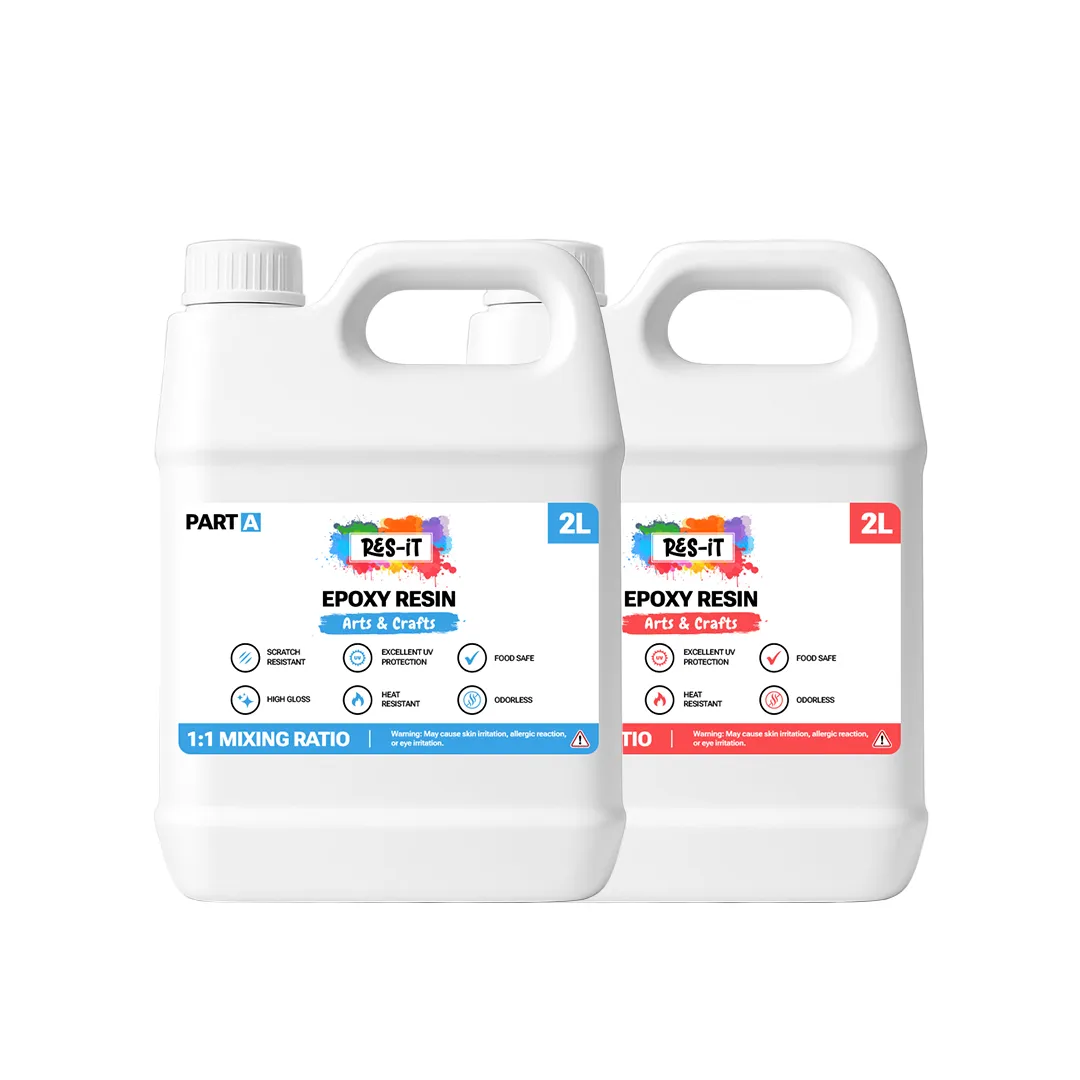
Step 7: Upselling with Resin Kits
By teaching customers to calculate precisely, you reduce waste and increase kit sales:
- A river table might need 8 L of resin → customer buys two 4 L kits instead of guessing with smaller packs.
- Coaster projects only need 200 ml → customer opts for smaller sample packs.
- Batch scaling advice encourages customers to buy larger kits but use safely.
Quick Reference Table (Resin Needed per Area)
Resin Volume Calculation
| Surface Area (m²) | Resin Thickness | Volume Needed |
|---|---|---|
| 0.25 (50×50 cm) | 1 mm | 250 ml |
| 0.5 (100×50 cm) | 2 mm | 1,000 ml (1 L) |
| 1 (100×100 cm) | 3 mm | 3,000 ml (3 L) |
| 2 (200×100 cm) | 5 mm | 10,000 ml (10 L) |
FAQ
Q: Can I pour leftover resin into another project?
Not if it has already started curing. Once resin warms up in the cup, use it immediately.
Q: How precise do I need to be?
Within 1-2% is usually fine. Too much hardener will not “speed up” curing, it will cause sticky, uncured resin.
Q: How do I avoid bubbles when mixing multiple batches?
Warm the bottles slightly before mixing, stir slowly, and use a heat gun or torch on the surface.
Conclusion
Calculating resin quantities doesn't have to be guesswork. With the formulas above, you can order exactly what you need, reduce waste, and avoid sticky disasters.
Whether you’re making coasters or casting a 3-metre river table, accurate calculations = smoother projects, lower costs, and professional results.