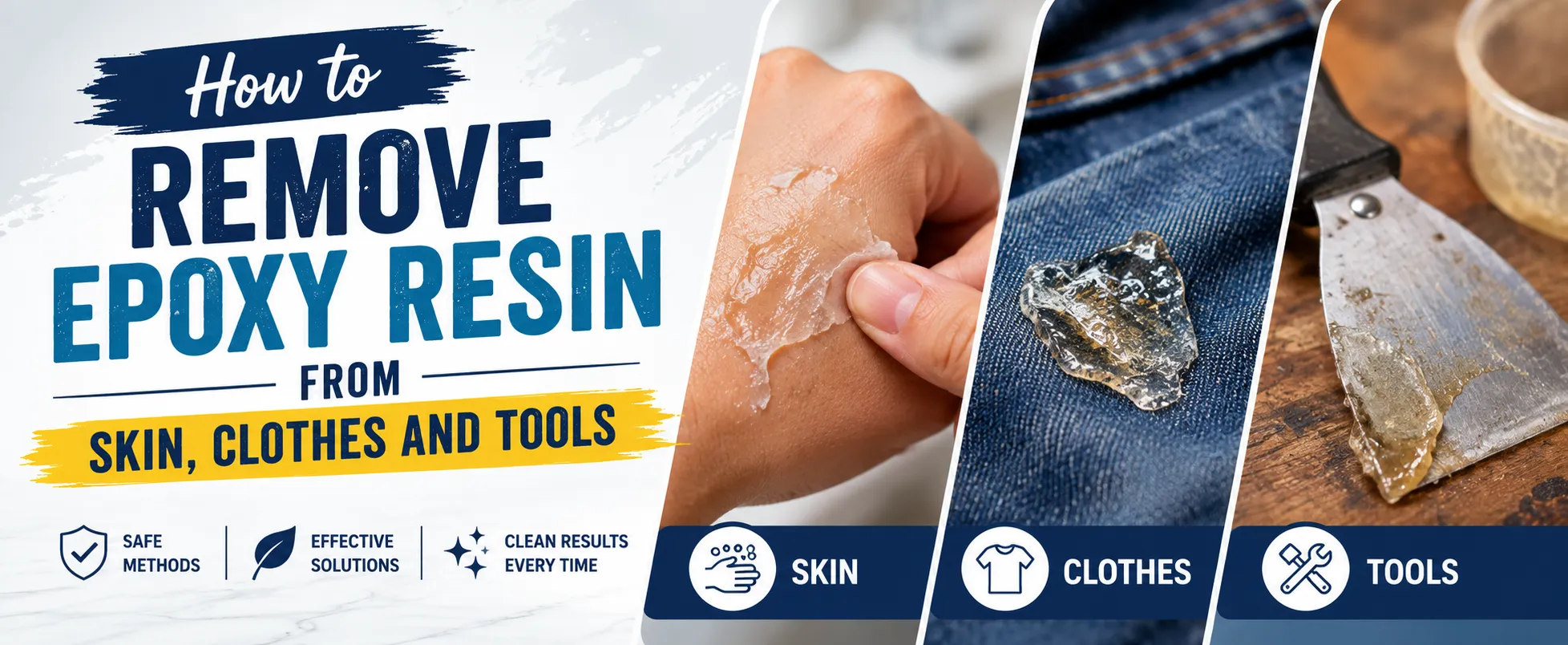
How to Remove Epoxy Resin from Skin, Clothes & Tools
Epoxy resin is one of the most versatile materials used in DIY crafts, woodworking, jewelry making, river tables, flooring, and industrial applications. It creates a durable, glossy, and waterproof finish that can last for years. However, one common challenge every beginner and professional faces is dealing with accidental spills and stains.
Whether you've spilled resin on your hands, splashed it on your clothes, or left your tools covered after a project, knowing the correct cleaning method can save both time and money. The removal process depends on whether the resin is still wet or has already cured, as hardened epoxy is significantly more difficult to remove.
In this comprehensive guide, you'll learn the safest and most effective ways to remove epoxy resin from skin, clothing, tools, and various surfaces. We'll also cover what products to avoid, expert cleaning tips, and preventative measures to make your next resin project much easier.
Why Is Epoxy Resin So Difficult to Remove?
Epoxy resin consists of two components—a resin and a hardener—that chemically react when mixed together. This reaction creates a strong plastic-like material that bonds tightly to almost any surface. Once cured, epoxy becomes resistant to water, chemicals, heat, and everyday wear, making it excellent for projects but difficult to clean.
The biggest factor that affects removal is timing. Fresh epoxy resin can often be cleaned using simple household products, whereas fully cured resin usually requires scraping, sanding, or specialized removers.
Wet (Uncured) Epoxy Resin
- Easier to remove.
- Can usually be cleaned with soap, vinegar, or isopropyl alcohol.
- Leaves minimal residue if cleaned immediately.
- Does not usually require scraping.
Cured Epoxy Resin
- Extremely hard and durable.
- Often requires mechanical removal.
- May need heat, sanding, or specialized epoxy removers.
- Should be removed carefully to avoid damaging surfaces.
Safety Tips Before Removing Epoxy Resin
Before attempting to clean epoxy resin, it's important to protect yourself and the surface you're working on. Some cleaning products contain strong solvents that can irritate the skin or damage delicate materials.
Follow These Safety Precautions
- Wear disposable nitrile gloves whenever handling uncured epoxy.
- Work in a well-ventilated area.
- Avoid using harsh solvents directly on your skin.
- Keep cleaning products away from children and pets.
- Always test cleaning solutions on a small hidden area first.
- Read the manufacturer's instructions before using chemical removers.
How to Remove Epoxy Resin from Skin
Getting epoxy resin on your hands is one of the most common accidents during resin projects. Fortunately, fresh epoxy resin can usually be removed safely without damaging your skin if you act quickly.
Method 1: Warm Water and Soap
For fresh resin spills, washing your hands immediately with warm water and mild soap is often enough. Warm water helps loosen the resin before it starts curing.
- Rinse your hands with warm water.
- Apply liquid soap generously.
- Rub your hands together for several minutes.
- Use a soft brush around fingernails if necessary.
- Rinse thoroughly.
- Repeat until all residue is gone.
Avoid using excessively hot water, as it may increase skin irritation if uncured resin is present.
Method 2: White Vinegar
White vinegar is one of the safest household solutions for removing uncured epoxy resin. Its mild acidity helps break down sticky resin without being as aggressive as industrial solvents.
- Soak a clean cloth with white vinegar.
- Rub the affected area gently.
- Continue until the resin softens.
- Wash your hands with soap and warm water.
- Apply moisturizer afterward.
Method 3: Cooking Oil or Baby Oil
Natural oils work surprisingly well because they loosen sticky resin while keeping the skin moisturized.
- Olive oil
- Coconut oil
- Baby oil
- Vegetable oil
Massage the oil into the affected area for several minutes before washing with warm soapy water.
Method 4: Isopropyl Alcohol
If soap alone doesn't remove the resin, isopropyl alcohol can help dissolve the remaining residue. Apply a small amount to a cotton pad or soft cloth and gently wipe the area.
After cleaning, wash your hands thoroughly and apply a moisturizer to prevent dryness.
Products You Should Never Use on Your Skin
Many people assume stronger chemicals clean resin faster, but some products can seriously damage your skin.
Avoid These Chemicals
- Acetone (frequent skin use)
- Paint thinner
- Lacquer thinner
- Gasoline
- Industrial solvents
- Bleach
These chemicals remove natural skin oils and may cause irritation, burns, or allergic reactions. They should only be used on appropriate tools or surfaces according to the manufacturer's recommendations.
How to Remove Epoxy Resin from Clothes
Epoxy resin stains on clothing can seem permanent, but acting quickly greatly improves the chances of saving the fabric. The cleaning method depends on whether the resin is still wet or has fully cured.
Removing Wet Epoxy Resin
- Lay the clothing flat.
- Blot excess resin using paper towels.
- Do not rub the stain deeper into the fibers.
- Apply isopropyl alcohol to a clean cloth.
- Blot gently from the outside toward the center.
- Wash immediately using the warmest water recommended on the garment label.
Never place stained clothing in a dryer before confirming the stain is completely gone. Heat can permanently set the remaining resin into the fabric.
Removing Hardened Epoxy Resin
If the resin has already cured, the process becomes more difficult. Place the garment in a freezer for several hours to make the resin brittle. Once frozen, gently flex the fabric and carefully chip away the hardened epoxy using a plastic scraper or your fingernail.
Any remaining residue may require a commercial epoxy remover that is safe for fabrics. Always test the product on an inconspicuous area first.
Quick Comparison of Skin Cleaning Methods
| Cleaning Method | Best For | Safety | Effectiveness |
|---|---|---|---|
| Warm Water & Soap | Fresh Resin | Excellent | ★★★★★ |
| White Vinegar | Sticky Residue | Excellent | ★★★★☆ |
| Baby Oil | Sensitive Skin | Excellent | ★★★★☆ |
| Olive Oil | Light Resin | Excellent | ★★★★☆ |
| Isopropyl Alcohol | Stubborn Fresh Resin | Good | ★★★★★ |
Now that you know the safest ways to remove epoxy resin from skin and clothing, the next section will explain how to clean resin from tools, brushes, mixing cups, work surfaces, and hardened equipment, along with expert tips, common mistakes to avoid, and additional comparison tables.
How to Remove Epoxy Resin from Tools
Cleaning your tools immediately after using epoxy resin is the best way to extend their lifespan and ensure they're ready for your next project. Brushes, mixing sticks, spreaders, measuring cups, and other tools are much easier to clean before the resin begins to cure.
Cleaning Uncured Epoxy Resin from Tools
- Wipe away excess resin using a paper towel.
- Clean the tool with isopropyl alcohol or white vinegar.
- Use a soft cloth to remove any remaining residue.
- Wash reusable tools with warm water and mild soap.
- Dry completely before storing.
Avoid leaving resin-covered tools unattended, as even a short delay can make cleaning much more difficult.
Removing Cured Epoxy Resin from Tools
If the epoxy resin has already hardened, mechanical removal is usually required. Use a plastic scraper to remove large pieces of resin, then gently sand away any remaining residue. For metal tools, a commercial epoxy remover may also help loosen cured resin.
- Scrape away loose resin carefully.
- Use fine-grit sandpaper for stubborn spots.
- Clean the tool after sanding.
- Dry thoroughly before reuse.
How to Remove Epoxy Resin from Mixing Cups
Mixing cups often contain leftover resin after a project. If you're using reusable silicone cups, allow the resin to cure completely before peeling it out. For plastic or disposable cups, it's usually easier to discard them after use.
Reusable Silicone Cups
- Allow the resin to cure fully.
- Gently squeeze the cup.
- Peel out the hardened resin.
- Wash with warm soapy water.
Plastic Mixing Cups
- Remove excess uncured resin with a paper towel.
- Clean with isopropyl alcohol if reusing.
- Replace damaged cups when necessary.
How to Remove Epoxy Resin from Brushes
Brushes used for epoxy resin can often be reused if cleaned before the resin cures. The longer the resin remains on the bristles, the more difficult it becomes to restore the brush.
- Remove excess resin using a paper towel.
- Soak the bristles in isopropyl alcohol.
- Gently comb through the bristles.
- Wash with warm water and mild soap.
- Allow the brush to air dry completely.
If the resin has fully cured inside the bristles, replacing the brush is usually the most practical solution.
How to Remove Epoxy Resin from Hard Surfaces
Accidental spills can happen on countertops, workbenches, tiles, glass, and other hard surfaces. Cleaning methods vary depending on whether the resin is still wet or fully cured.
Wet Epoxy Resin
- Wipe away excess resin immediately.
- Clean the area with isopropyl alcohol.
- Finish with warm water and soap.
Cured Epoxy Resin
- Use a plastic scraper.
- Apply gentle heat if recommended for the surface.
- Remove remaining residue carefully.
- Polish the surface if required.
How to Remove Epoxy Resin from Wood
Wood surfaces require extra care because aggressive scraping or harsh chemicals can damage the finish. Allow cured resin to harden completely before gently scraping away excess material.
- Use a plastic scraper.
- Sand lightly using fine-grit sandpaper.
- Wipe away dust.
- Refinish the wood if necessary.
How to Remove Epoxy Resin from Glass
Glass is one of the easiest surfaces to clean because cured epoxy resin does not penetrate it. Use a plastic scraper held at a low angle to lift the hardened resin without scratching the glass.
- Remove loose resin carefully.
- Clean with glass cleaner.
- Polish using a microfiber cloth.
How to Remove Epoxy Resin from Metal
Metal tools and work surfaces can usually withstand stronger cleaning methods than other materials. Use a scraper first, followed by an epoxy remover if necessary.
- Scrape away hardened resin.
- Apply an epoxy remover if needed.
- Clean with warm soapy water.
- Dry completely to prevent corrosion.
Common Mistakes to Avoid
Many people accidentally make epoxy resin harder to remove by using the wrong cleaning methods. Avoid these common mistakes to protect your skin, clothing, tools, and work surfaces.
- Waiting too long before cleaning spills.
- Using sharp metal blades on delicate surfaces.
- Scrubbing resin deeper into fabric.
- Using strong solvents directly on your skin.
- Ignoring the manufacturer's cleaning recommendations.
- Using excessive force while scraping.
- Drying stained clothes before the resin is fully removed.
Best Cleaning Methods Comparison
| Surface | Best Method | Difficulty |
|---|---|---|
| Skin | Soap and Warm Water | Easy |
| Clothes | Isopropyl Alcohol (Wet Resin) | Medium |
| Tools | Isopropyl Alcohol | Easy |
| Glass | Plastic Scraper | Easy |
| Wood | Scraping and Light Sanding | Medium |
| Metal | Scraper and Epoxy Remover | Easy |
| Silicone Cups | Peel After Curing | Very Easy |
Pro Tips for Easy Epoxy Resin Cleanup
- Wear disposable gloves before mixing epoxy resin.
- Cover your work area with a protective sheet.
- Keep paper towels nearby for quick cleanup.
- Clean tools immediately after use.
- Use silicone mixing accessories for easier cleaning.
- Store cleaning supplies within easy reach.
- Always follow the resin manufacturer's instructions.
Frequently Asked Questions
Can epoxy resin be removed after it has cured?
Yes. Cured epoxy resin can be removed, but it usually requires scraping, sanding, heat, or a commercial epoxy remover. The earlier you remove it, the easier the process will be.
What removes epoxy resin from skin the fastest?
Warm water and mild soap are the safest first option. If resin remains, white vinegar, baby oil, or isopropyl alcohol can help remove the residue without damaging your skin.
Can I use acetone to remove epoxy resin?
Acetone can remove uncured epoxy resin from some tools and hard surfaces, but it is not recommended for frequent use on skin because it can cause dryness and irritation.
Will epoxy resin wash out of clothes?
Wet epoxy resin can often be removed if treated immediately. Once the resin has cured, complete removal becomes much more difficult and may not always be possible depending on the fabric.
How do I clean epoxy resin brushes?
Clean brushes immediately after use by wiping off excess resin, soaking the bristles in isopropyl alcohol, and then washing them with warm water and mild soap.
Can vinegar remove epoxy resin?
Yes. White vinegar is an effective household cleaner for removing uncured epoxy resin from skin and some tools. It is a safer alternative to many harsh solvents.
What is the best way to prevent epoxy resin from sticking?
Wear disposable gloves, protect your work surface, clean spills immediately, and use silicone mixing accessories to make cleanup much easier.
Quick Removal Guide
| Item | Recommended Cleaning Method | Best Time to Clean |
|---|---|---|
| Skin | Warm Water, Soap, Vinegar or Baby Oil | Immediately |
| Clothes | Blot and Use Isopropyl Alcohol | Before Curing |
| Brushes | Isopropyl Alcohol and Soap | Immediately |
| Mixing Cups | Peel Out Cured Resin (Silicone) | After Curing |
| Glass | Plastic Scraper | After Curing |
| Wood | Plastic Scraper and Sandpaper | After Curing |
| Metal Tools | Scraper and Epoxy Remover | Before or After Curing |
Essential Cleanup Checklist
- Clean epoxy resin before it fully cures whenever possible.
- Wear gloves to protect your skin.
- Use warm water and soap as your first cleaning method.
- Keep isopropyl alcohol or white vinegar available during every project.
- Allow silicone cups to cure before peeling out leftover resin.
- Store tools only after they have been completely cleaned and dried.
- Read and follow the manufacturer's safety instructions.
Final Thoughts
Removing epoxy resin doesn't have to be difficult when you use the right technique for the surface you're cleaning. Whether the resin is on your skin, clothes, tools, wood, glass, or metal, acting quickly is the key to successful removal. Fresh epoxy resin is much easier to clean than fully cured resin, so always deal with spills as soon as they happen.
Using safe cleaning products such as warm soapy water, white vinegar, baby oil, and isopropyl alcohol can help remove uncured resin effectively while protecting your skin and equipment. For cured epoxy resin, gentle scraping, sanding, or specialized epoxy removers may be necessary depending on the material.
By following the methods, tips, and best practices in this guide, you can keep your workspace clean, extend the life of your tools, and avoid unnecessary damage to your clothing and project surfaces. Proper preparation, quick cleanup, and regular maintenance will make every epoxy resin project safer, easier, and more enjoyable.