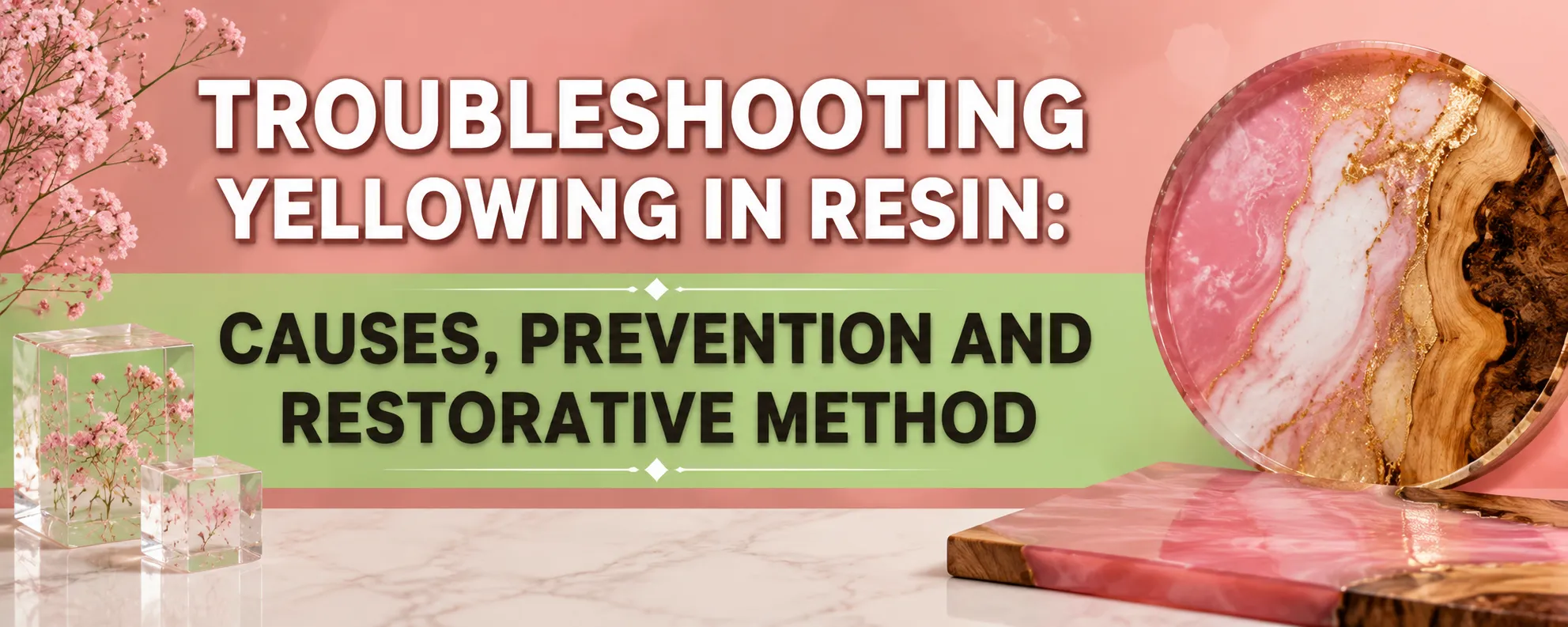
How to Prevent Epoxy Resin Yellowing
You spend hours creating a crystal-clear resin piece, only to notice it turning yellow over time. Whether you make jewellery, coasters, river tables, trays, or resin art, yellowing epoxy resin is one of the most common frustrations for resin artists and DIY makers.
The good news is that epoxy resin yellowing can often be slowed down or prevented with the right materials, proper curing conditions, and UV protection. In this guide, you will learn what causes resin to turn yellow, how to prevent discoloration, and the best ways to restore clarity to your resin projects.
Why Does Epoxy Resin Turn Yellow?
Even high-quality epoxy resin can develop a slight warm tone over many years. However, certain conditions can dramatically speed up the yellowing process.


Res-iT 2L Pro Epoxy Resin Kit

Res-iT Epoxy Resin 1L Starter Kit
UV Exposure
UV light is the leading cause of epoxy resin yellowing. Sunlight and strong indoor lighting gradually break down the resin’s chemical structure, causing oxidation and amber discoloration.
Common signs include:
- Yellow or amber tinting
- Fading clarity on transparent pieces
- More visible discoloration on white or light-coloured artwork
Quick Checklist to Prevent Resin Yellowing
- Use UV-resistant epoxy resin.
- Avoid direct sunlight.
- Apply a protective topcoat.
- Measure resin accurately.
- Keep humidity levels low.
- Avoid excessive heat.
- Store resin correctly.
- Use clean mixing tools.
Heat and Temperature Exposure
Excessive heat during curing or storage can accelerate oxidation in epoxy resin. Resin pieces placed near windows, radiators, or direct sunlight often yellow faster over time.
Low-Quality Resin Formulas
Cheaper epoxy resins may lack UV stabilizers and optical brighteners that help slow down discoloration. Without these protective additives, resin naturally darkens more quickly.
Contamination During Mixing
Dirty mixing cups, reused tools, moisture, or incompatible pigments can introduce contaminants that affect resin clarity and increase the risk of yellowing.
Incorrect Mixing Ratios
Using too much hardener or failing to mix thoroughly can create chemical instability, leading to cloudy curing, soft spots, or yellow-tinted resin.
How to Prevent Resin Yellowing
Preventing yellowing is far easier than fixing it later. These professional tips will help your resin projects stay crystal clear for years.
Choose UV-Resistant Epoxy Resin
Always use a high-quality UV-resistant epoxy resin designed to resist discoloration. Premium formulas contain UV absorbers and HALS (Hindered Amine Light Stabilizers) that help slow photo-oxidation. If you're comparing different brands, discover why Epoxy Res-iT is one of the best epoxy resin choices in the UK.
For best results, choose non-yellowing epoxy systems such as Epoxy Res-iT Premium Clear Resin.
| Cause | Effect | Solution |
|---|---|---|
| UV exposure | Yellow tint | Use UV-resistant resin |
| Heat exposure | Oxidation | Maintain stable temperatures |
| Incorrect mixing ratio | Cloudy finish | Measure accurately |
| Moisture contamination | Reduced clarity | Use clean tools |
Avoid Direct Sunlight
Cure and store resin projects away from direct sunlight whenever possible. For display pieces placed near windows, consider using UV-filtering acrylic covers or protective glass.
Measure Resin Accurately
Always follow the manufacturer’s recommended resin-to-hardener ratio, whether it is 1:1 or 2:1. Accurate measuring is essential for a stable, clear cure.
Use Clean Compatible Tools
Contaminated tools and old pigment residue can affect resin clarity. Clean all mixing tools with isopropyl alcohol and allow them to dry fully before use. If your resin has already become cloudy before curing, read our guide on how to fix crystallized or cloudy resin.
Apply UV-Protective Topcoats
A UV-resistant topcoat adds another layer of protection against sunlight and scratches, especially for resin tables, trays, and wall art.
Res-iT Tip: Epoxy Res-iT Protective Gloss Topcoat helps maintain clarity while protecting resin surfaces from UV exposure and daily wear.
How to Fix Yellowing Resin
If your epoxy resin has already started turning yellow, some restoration methods may help improve its appearance depending on the severity of discoloration.
Fixing Surface Yellowing
For light surface discoloration:
- Wet sand using 1000–2000 grit sandpaper
- Clean thoroughly with alcohol wipes
- Apply a fresh layer of UV-stable resin or clear protective coating
This process can restore gloss and improve clarity significantly.
Fixing Moderate Resin Discoloration
For more visible yellowing:
- Polish the surface to improve transparency
- Apply a new clear flood coat
- Add a tiny amount of blue or violet tint to balance amber tones
Fixing Severe Yellowing
If the yellowing extends throughout the entire pour, complete restoration may not be possible.
In these situations:
- Sand the surface and re-pour a fresh resin layer
- Reuse the piece as a practice board or creative base
This reduces waste and gives you an opportunity to reuse the project creatively.
Setting Realistic Expectations
Even the best non-yellowing epoxy resin may develop a slight warm tone after many years. This is a natural characteristic of epoxy materials, but proper care can dramatically slow the process.
To keep resin projects clear for longer:
- Limit UV exposure
- Store pieces at stable room temperature
- Use UV-resistant topcoats
- Avoid excessive heat during curing
In UK workshops, resin pieces stored indoors away from direct sunlight typically maintain clarity much longer than pieces exposed to strong window light or outdoor conditions.
Recommended Products to Prevent Resin Yellowing
| Product | Best For | Main Benefit |
|---|---|---|
| UV-Resistant Epoxy Resin | Art, coasters, casting | Slows yellowing and ageing |
| Protective Gloss Topcoat | Tables, trays, wall art | UV and scratch protection |
| Resin Pigments & Tints | Colour correction | Helps neutralize amber tones |
| Cleaning Solutions | Tool maintenance | Prevents contamination |
Explore the complete range of non-yellowing epoxy resin systems and protective coatings from Epoxy Res-iT UK, designed for long-lasting clarity and professional results.
Frequently Asked Questions About Resin Yellowing
Why does epoxy resin turn yellow over time?
UV exposure, heat, oxidation, and low-quality resin formulas are the main causes of epoxy resin yellowing. Resins without UV stabilizers tend to discolor faster.
How can I prevent epoxy resin yellowing?
Use UV-resistant epoxy resin, avoid direct sunlight, measure accurately, and apply a protective topcoat to slow discoloration.
Can yellowed resin be restored?
Light surface yellowing can often be improved with sanding, polishing, and re-coating. Deep internal yellowing is usually permanent.
Does all epoxy resin eventually yellow?
Most epoxy resins develop slight warmth over many years, but high-quality UV-stabilized resin can remain clear for a very long time when properly maintained.
What is the best non-yellowing epoxy resin in the UK?
Choose epoxy resin systems with built-in UV blockers and HALS technology. Premium products like Epoxy Res-iT Premium Clear and Deep Pour Resin are designed to resist yellowing in UK conditions.
Final Thoughts
Yellowing epoxy resin can be frustrating, but with the right materials and proper care, you can keep your resin creations crystal clear for years.
Using UV-resistant epoxy resin, maintaining a clean workspace, measuring accurately, and protecting finished pieces from sunlight will dramatically improve long-term clarity and durability.
At Epoxy Res-iT, we create high-clarity, non-yellowing epoxy resin systems trusted by artists, makers, woodworkers, and DIY creators across the UK.
Your artwork deserves lasting clarity and professional results.
Read more about preventing epoxy yellowing.