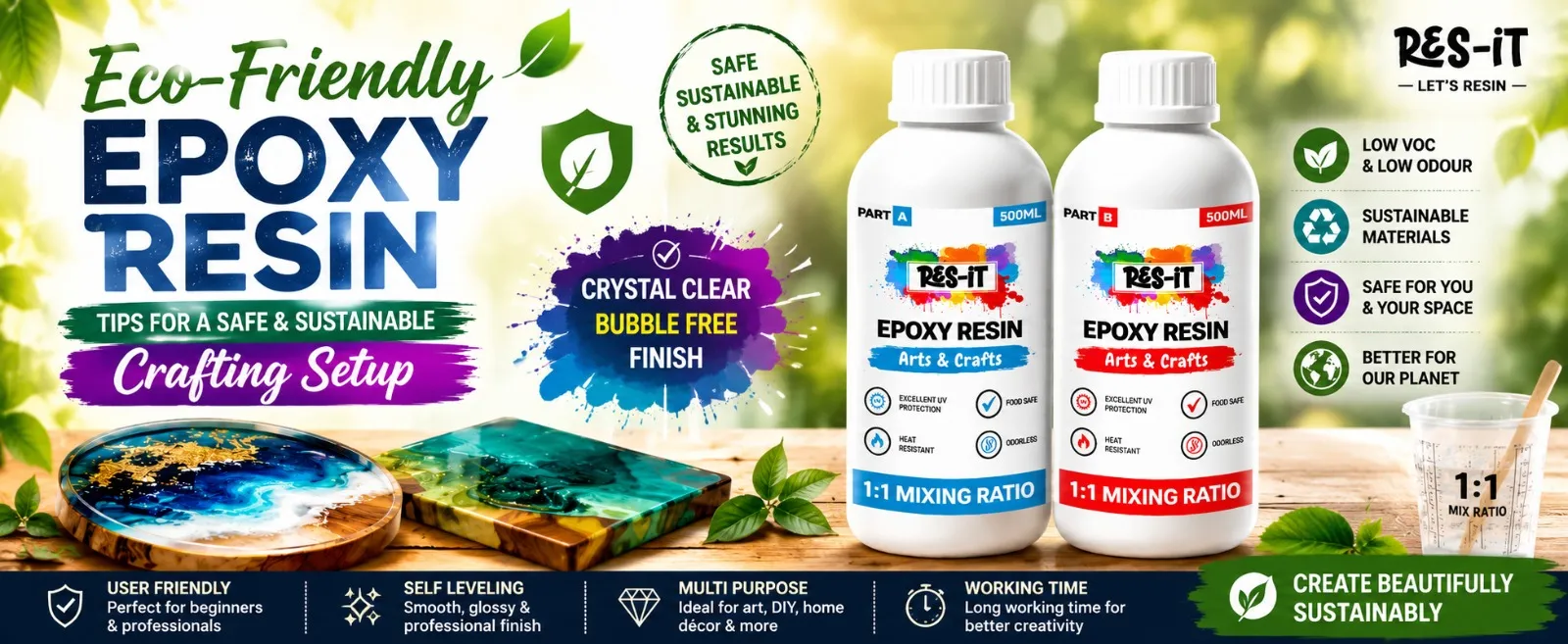
Eco-Friendly Epoxy: Tips for a Safe and Sustainable Crafting Setup
Introduction
Epoxy resin has quickly become one of the most popular materials for DIY enthusiasts, artists, and professional makers. Its versatility makes it ideal for everything from jewellery and river tables to home décor, artwork, and commercial flooring.
As resin crafting continues to grow in popularity, many creators are asking an important question: How can you work with epoxy resin in a way that is safe for both you and the environment?
Fortunately, eco-friendly resin products and sustainable crafting practices are now more accessible than ever. By choosing the right materials, creating a safe workspace, and adopting environmentally responsible habits, you can reduce waste without compromising the quality of your resin projects.
In this guide, you'll discover practical tips for creating a safe, efficient, and sustainable epoxy resin workspace while producing beautiful, long-lasting results.
Eco-Friendly Resin Checklist
- ✔ Choose a low-VOC or low-odour epoxy resin.
- ✔ Wear appropriate PPE, including nitrile gloves and safety glasses.
- ✔ Use reusable silicone mixing cups and stir sticks.
- ✔ Mix only the amount of resin you need.
- ✔ Work in a well-ventilated area.
- ✔ Reuse cured resin offcuts for future projects.
- ✔ Dispose of uncured resin responsibly—never pour it down the drain.
- ✔ Store resin in a cool, dry place to extend its shelf life.
The importance of Eco-friendly Epoxy
The making of resin traditionally uses chemicals that may release VOCs (volatile organic compounds), use one-use plastics, and also create unneeded waste. These aspects may over time negatively impact the environment and personal health.
Using environment-friendly resins and practising sustainable crafting give you several benefits:
- Greener work setting: Less fume, less smell and less skin infection.
- Less poisonous indoors: Good in the home studio, in a classroom or a small workroom.
- Sustainability: Minimal impact on the biosphere and reduced petrochemicals utilisation.
- Greener image: The more environmentally friendly the practices of artists and companies are, the more environmentally conscious clients are likely to be attracted to them.
Eco-Friendly Epoxy Resin:
Not every epoxy is the same. In purchasing green alternatives, seek the following:
VOC-Free/Low-Odour Formulations.
Low or zero VOC resins significantly reduce harmful emissions and become safer to use indoors without heavy ventilation.
Non-Toxic Certifications:
Non-toxic or food-safe certification checks labels. Such products are frequently tested to be safer when touching the skin and to limited contact with the environment.
Eco-Conscious Packaging:
There are suppliers such as Epoxy Res-iT that provide recyclable containers and minimal plastic packaging, hence reducing the total waste.
Bio-Based Resins:
Few brands are now selling epoxies that are partially based on renewable materials such as plants. They may not be 100% biodegradable, but they are a huge leap in the green manufacturing process.
Establishing a safe, sustainable creating environment
Energy-Wasting-Free Ventilation.
- Cross-ventilate (using windows) instead of using electric exhaust fans alone.
- Use models that consume less energy when they are required.
Reusable Single-Use.
- Exchange plastic disposable cups with silicone mixing cups that can be reused over and over again.
- Use metal stir sticks or wooden sticks instead of plastic sticks.
Protective Gear that Lasts
- Wearable fabric aprons instead of single-use protective clothing.
- Use reusable nitrile gloves where possible and recycle them.
Eco-Friendly Surfaces
- Instead of covering the working space with cheap plastic, clean and durable silicone mats can be utilised.
Environmentally Friendly Making.
- Mix Only What You Need
- An over-mixing of resin results in unnecessary wastage. Fill with proper digital scales or measuring cups, or there will be a residual.
Cure Responsibility
- Maintain the curing station at a constant temperature to prevent wastage of the resin in unsuccessful projects. A heat-resistant or warm water bath can be used to keep the resin flowing.
Recycle Where Possible
- Dripped resin may also be harvested and made into decorative chips or mosaic-like pieces.
- If recycling is accepted in a specific area, empty resin boxes are to be rinsed and put in the recycling bins.
Repurpose Offcuts
- Unused cured resin can be drilled, sanded, and made into jewellery, keychains or embellishments instead of being put away.
Ecofriendly Pigments and Additives.
The synthetic dyes and plastics are found in many of the traditional resin pigments. For a greener alternative:
- Mica powders: Mica powders are naturally obtained and durable.
- Plant pigments: some companies are currently offering pigments made out of natural substances.
- Eco-safe glitters: Biodegradable glitters will be better than microplastics.
Green resins being used with these pigments will help minimise the pollution of microplastics and will give your works green.

Tips for DIY Enthusiasts
- Start small to reduce wastage of material.
- Train the practise on offcuts or recycled moulds before resin is used.
- To achieve a long shelf life of resin and prevent spoilage, store resin in a cool, dark environment.
Tips for Artists
- Promote yourself as eco-friendly resin art- this is very attractive to buyers in the environmental community.
- Supplement eco-friendly resin with reclaimed wood, recycled moulds or natural fillers.
- Publicise your sustainable practises on social media and in product descriptions.
Tips for Industrial Clients
- Focus on buying bulk quantities of epoxy with low VOC to reduce the amount of packaging waste.
- Familiarise and train personnel with environmentally friendly mixing and curing methods to prevent wastage.
- Install energy-efficient professional ventilation.
- Industrial storage containers for the resin.
Common Eco-Friendly Resin Problems and Solutions
| Problem | Solution |
|---|---|
| Resin finish is cloudy? | Test humidity. Keep levels below 60%. |
| Resin is excessively viscous? | Warm the sealed bottle in warm water (10-15 min). |
| Less than 1-hour working time? | Go to eco-resins that have longer open time. |
| Lumpy curing? | Make the room temperature the same (20-25 degrees). |
FAQs
Q: Do eco-friendly resins weaken compared to the traditional ones?
No. Most VOC-free and bio-based resins also work equally well, giving good adhesion, strength, and clear coating.
Q: Is it possible to place eco-friendly epoxy outside?
Yes, but make sure to check UV stability ratings and apply a protective topcoat where it is required.
Q: What is the safest way to get rid of the resin that is remaining?
Always leave it to dry completely into a solid before getting rid of it. Do not put liquid resin down the drain.
Q: Does epoxy exist that is biodegradable?
Most epoxies are not entirely biodegradable at the moment, but bio-based formulations are more environmentally friendly.
Conclusion
Resin is not about lowering quality to achieve sustainability; it is about making wiser decisions. Once you decide to use eco-friendly epoxy, reuse tools and build green crafting habits, you will be able to have fun with your projects without risking your health or the planet.
The future of resin work is a safe and sustainable epoxy system, whether you are an amateur DIYer, a professional artist, or an industrial worker.
Craft responsibly. Create beautifully. Care for the planet.