How to Store Epoxy Resin Safely
Knowing how to store resin properly is essential if you want perfect results every time. Epoxy resin is a high performance material that is applied to wood, resin art, flooring, river tables, jewellery and DIY. Yet, there is one thing a lot of beginners and even experienced users forget about and it is the appropriate storage.
The management of the epoxy resin in a proper way is such that it retains clarity, strength, and ability to cure. The poor storage may cause crystallization, yellowing, thickening, or poor performance.
In this step by step tutorial, you will get to know how to keep epoxy resin in a safe place, how to prolong the shelf life, and how to preserve it in a good state to use in your next context.

Importance of Proper Epoxy Resin Storage
Epoxy resin is a compound that is composed of two components:
- Resin (Part A)
- Hardener (Part B)
The two elements are sensitive to:
- Temperature changes
- Moisture
- Sunlight
- Air exposure
Poor storage may have an impact on chemical equilibrium between these two components which will result in curing issues or low bond finishes.
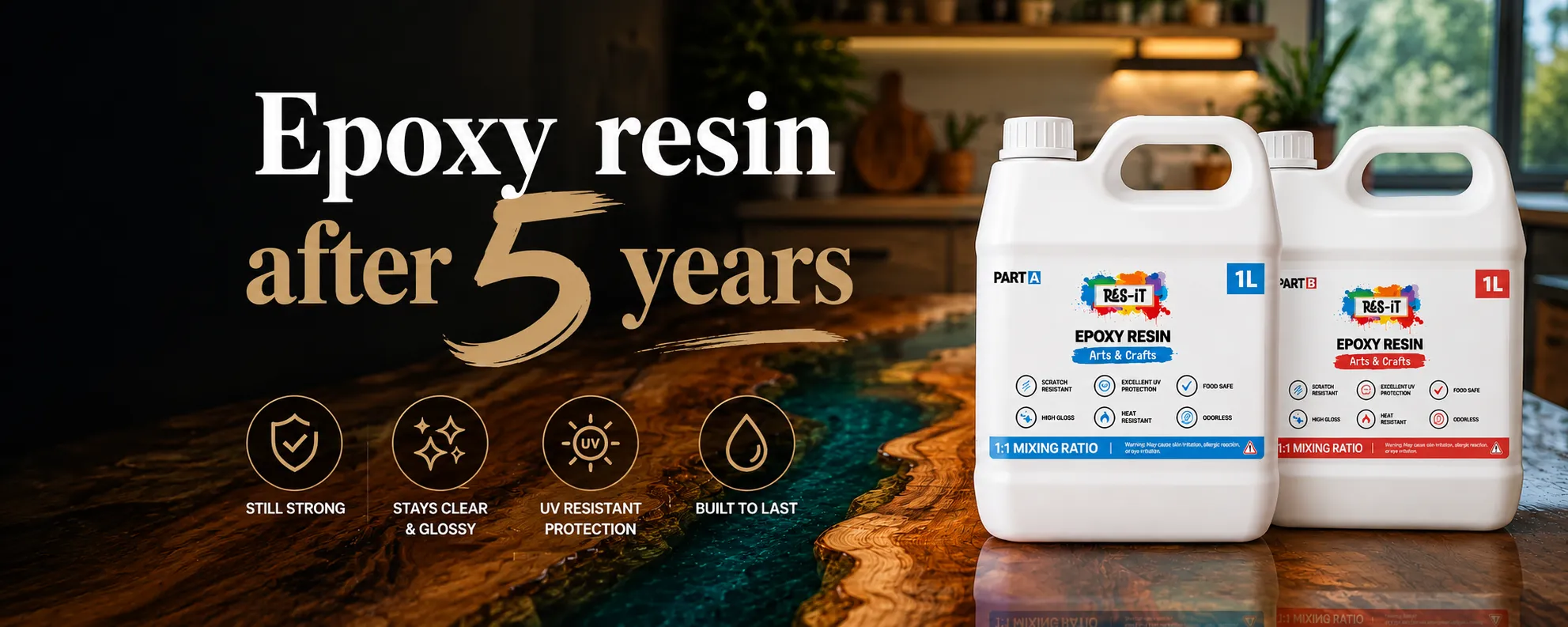
When you are using good resin such as Res-iT Epoxy Resin, you need to store it properly in order to achieve the best performance when you are pouring.
Optimal Storage Temperature for Epoxy Resin
The most significant one is temperature.
Storage Temperature should be kept at:
15°C to 25°C (59°F to 77°F)
Avoid:
- Cold garages in winter
- Hot sheds in summer
- Direct sunlight
- Areas near heaters
When resin is too cold it might crystallize or thicken. When it is excessive hot, it will degrade or yellow.
Maximum efficacy is obtained by storing your resin within a room that is controlled by temperature.
Keep Moisture & Air Away
One of the greatest enemies of epoxy is moisture.
Exposure to humidity can:
- Cause cloudy finishes
- Affect curing
- Introduce bubbles
- Weaken bonding strength
Always:
- Containers should be tightly closed.
- Keep in dry cupboard or storage cupboard.
- It should not be stored in damp basements or the outside.
Air exposure can also affect the hardener, so close lids immediately after use.
Keep in Original Packages
Do not pour epoxy resin into random bottles unless it is absolutely necessary.
Original containers:
- Are chemically resistant
- Prevent contamination
- Maintain proper sealing
- Include safety labeling
Such quality brands as Res-iT offer safe packaging to maintain the resin integrity.
Shelf Life of Epoxy Resin
The shelf life of most epoxy Resins is:
12-24 months (when stored properly)
Indications that your resin has expired:
- Strong unusual odor
- Excessive thickening
- Dark yellow color
- Hardener becoming cloudy
When properly stored, high quality products such as Res-iT epoxy resin may even last long without a decline in their shelf life.
Crystallization of Resin What to Do
In cold weather sometimes resin can appear thick or even be in the form of crystals. Don't panic, this is normal.
To Fix:
- Put the resin bottle, which is closed, into warm water (not boiling).
- Let it sit for 15-30 minutes.
- Gently shake once warmed.
The resin is supposed to resume its normal flow in the form of liquid.
Do not microwave resin, overheat resin.
Epoxy Resin Storage Safety
- Do not keep with children and pets.
- Store away from food
- Avoid open flames
- Label clearly
- Keep in ventilated space
Nitrile Gloves should also be used when handling containers.
FAQs About Storing Epoxy Resin
Can epoxy resin go bad if it is stored incorrectly?
Yes. Exposure to excessive heat, moisture, air, or unsuitable storage conditions can affect the resin's appearance, consistency, and curing performance. Proper storage helps maintain its quality for longer.
What is the best temperature to store epoxy resin?
The recommended storage temperature in this guide is 15°C to 25°C (59°F to 77°F). Avoid storing epoxy resin in very cold garages, hot sheds, direct sunlight, or near heaters.
How long does epoxy resin last in storage?
Most epoxy resin products have a shelf life of around 12–24 months when stored correctly. Always check the manufacturer's instructions and product information for the specific shelf life of your resin.
Why does epoxy resin become thick or crystallized?
Cold temperatures can cause epoxy resin to become thicker or develop crystals. This does not necessarily mean the resin is unusable. A sealed bottle can be gently warmed in warm, non-boiling water for around 15–30 minutes to help restore its normal consistency.
Can I store epoxy resin in direct sunlight?
No. Epoxy resin should be kept away from direct sunlight and excessive heat. A cool, dry, temperature-controlled storage area is preferable.
Should epoxy resin be stored in its original containers?
Yes. Keeping resin and hardener in their original containers helps maintain proper sealing, reduces contamination, and keeps important product and safety information available.
How can I protect epoxy resin from moisture?
Keep the containers tightly closed when not in use and store them in a dry cupboard or other suitable dry storage area. Avoid damp basements and outdoor storage where moisture levels can fluctuate.
Can epoxy resin be stored near food or household items?
No. Store epoxy resin away from food, children, pets, and incompatible household materials. Keep the containers clearly labelled and follow the manufacturer's storage and safety instructions.
Can I microwave epoxy resin to remove crystallization?
No. Do not microwave or excessively heat epoxy resin. If crystallization occurs, the guide recommends warming the sealed bottle in warm, non-boiling water and allowing the resin to return to a workable consistency gradually.
How do I know if my epoxy resin has deteriorated?
Possible signs include excessive thickening, an unusual strong odour, dark yellowing, or a cloudy appearance in the hardener. If you notice significant changes, check the product manufacturer's guidance before using the material.
Final Thoughts
Learning how to store resin correctly keeps it clear, strong, and ready to use. Just remember:
- Cool
- Dry
- Sealed
- Away from sunlight
These small steps protect your investment and ensure perfect results in every project.