How Long Does Epoxy Resin Take to Cure? A Complete Curing Guide
Epoxy resin is one of the most versatile materials for resin art, DIY crafts, furniture projects, jewellery, tabletops and decorative pieces. However, one of the most common questions beginners ask is: how long does epoxy resin take to cure?
The short answer is that most epoxy resin projects take around 24–48 hours to become firm enough for light handling, while complete curing can take approximately 3–7 days, depending on the resin system, temperature, humidity, pour depth, mixing ratio and project size.
Understanding the difference between drying, setting and curing is important because an epoxy surface may feel hard while the resin underneath is still developing its final strength. In this guide, we explain epoxy resin curing times, the different curing stages, factors that affect curing and practical tips for achieving a smooth, strong and fully cured finish.
How Long Does Epoxy Resin Take to Cure?
The curing time of epoxy resin varies between products, but a typical two-part epoxy resin follows several stages before reaching its final hardness.

Res-iT Epoxy Resin 480ml Starter Kit

Res-iT Epoxy Resin 1L Starter Kit
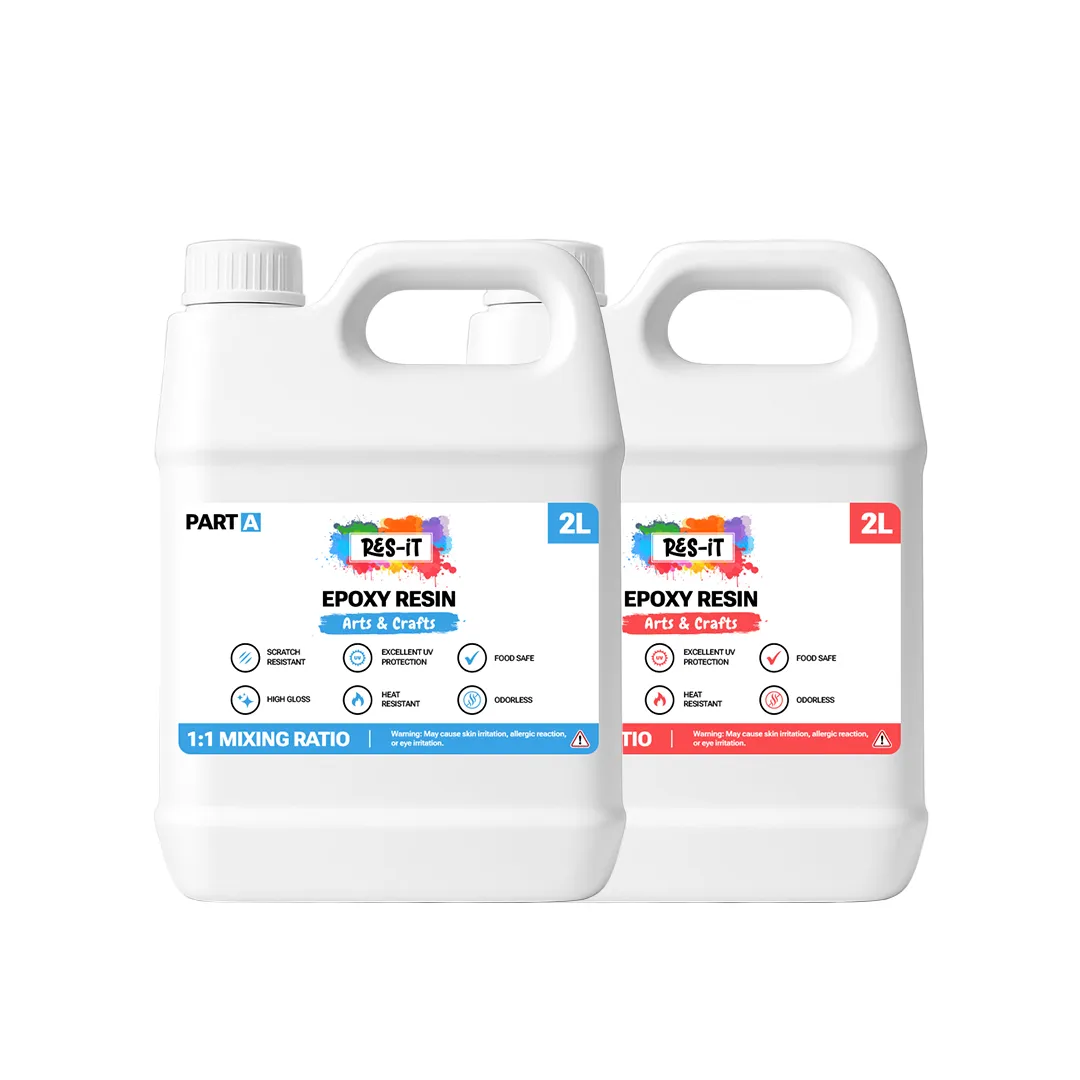
Res-iT Epoxy Resin 4L Pro Kit
| Curing Stage | Typical Time | What It Means |
|---|---|---|
| Working Time | 20–45 minutes | Time available to mix and apply the resin |
| Initial Set | 4–8 hours | Resin begins becoming firm |
| Touch Dry | 12–24 hours | Surface is generally no longer liquid or sticky |
| Light Handling | 24–48 hours | Project can usually be handled carefully |
| Full Cure | 3–7 days | Resin reaches much of its final hardness and performance |
These timings are general guidelines rather than guarantees. Always check the manufacturer's instructions for the specific epoxy resin you are using because different formulas are designed for different applications.
What Is the Difference Between Drying and Curing?
Epoxy resin does not simply dry in the same way as paint or water-based glue. Instead, it undergoes a chemical curing reaction when its resin and hardener components are mixed in the correct proportion.
During curing, the molecules in the two components react and form a solid polymer structure. This process gradually changes the resin from a liquid into a hard, durable material.
Drying vs Curing
Drying generally means that a material loses moisture or solvent and becomes dry to the touch. Curing is different because epoxy resin develops its hardness through a chemical reaction.
This is why an epoxy project can feel hard on the surface but still require several more days before it reaches its recommended full cure.
Epoxy Resin Curing Stages Explained
1. Working Time
Working time, sometimes called pot life, is the period during which mixed epoxy remains workable. Depending on the formula and environmental conditions, this may be around 20–45 minutes.
During this stage, you can pour the resin, spread it across a surface, add pigments and remove visible bubbles. Once the resin begins thickening, it becomes increasingly difficult to achieve a smooth finish.
2. Initial Set
After several hours, the epoxy starts becoming significantly thicker and firmer. The exact timing depends on the resin system and temperature.
At this point, the surface may look solid, but the resin is still curing internally. Avoid moving, pressing or placing heavy objects on the project during this stage.
3. Touch-Dry Stage
After approximately 12–24 hours, many standard epoxy systems become firm enough that the surface is no longer liquid. However, touch-dry does not necessarily mean fully cured.
Heavy handling, sanding or exposing the project to demanding conditions too early can affect the final result.
4. Light Handling
After around 24–48 hours, many epoxy projects can be handled carefully. Small resin crafts may be ready for gentle movement, while larger projects may require additional curing time.
Even when an item feels hard, it is best to avoid unnecessary pressure until the manufacturer's recommended curing period has passed.
5. Full Cure
Full cure commonly takes around 3–7 days for many epoxy resin systems. During this period, the resin continues developing its final hardness and durability.
Deep pours, large castings and certain specialist epoxy formulations may require longer. Always follow the technical instructions supplied with your particular resin.
What Factors Affect Epoxy Resin Cure Time?
If your epoxy resin is taking longer than expected to cure, environmental and application conditions may be responsible. Understanding these factors can help you plan projects more accurately.
1. Temperature
Temperature is one of the most important factors affecting epoxy curing. Epoxy generally cures more efficiently in a suitable warm environment, while cooler conditions can slow the chemical reaction.
A cold workshop, garage or room can therefore make resin remain soft or tacky for longer than expected.
For best results, work within the temperature range recommended by the manufacturer. Avoid placing resin directly next to strong heaters because excessive heat can create other problems, including rapid curing, bubbles or an uneven surface.
2. Humidity
Humidity can also influence certain resin systems and the overall working environment. High humidity may contribute to surface problems depending on the product and materials being used.
A clean, dry and stable workspace is generally preferable for resin projects.
3. Mixing Ratio
One of the most important rules when using two-part epoxy resin is to use the correct resin-to-hardener ratio.
Do not guess the ratio or add extra hardener because you want the resin to cure faster. Epoxy formulations are chemically balanced, and adding too much or too little of one component can result in soft, sticky or improperly cured resin.
Always measure according to the manufacturer's stated ratio. Depending on the product, the ratio may be specified by weight or by volume, so check the instructions carefully.
4. Mixing Quality
Even when the correct amount of resin and hardener is used, poor mixing can cause curing problems.
Mix slowly and thoroughly, scraping the sides and bottom of the mixing cup as recommended by the manufacturer. Incomplete mixing can leave areas with different curing characteristics.
5. Pour Depth
The thickness of your epoxy pour can have a major effect on curing behaviour. Standard coating resin is usually designed for relatively thin applications, while deep pour epoxy resin is formulated for thicker casts.
Pouring a standard coating resin too deeply can generate excessive heat during curing and may cause cracking, overheating or other defects.
For thick projects, use a resin specifically designed for deep casting and follow its recommended maximum pour depth.
How Long Does Epoxy Resin Take to Cure on Different Projects?
Not every resin project has the same curing requirements. A thin coaster coating and a deep river table pour behave differently because of differences in volume, thickness and heat generation.
Resin Coasters
Small resin coasters may become firm within 24–48 hours, but allowing several days for a full cure can provide better hardness and durability.
Resin Jewellery
Small jewellery pieces often cure relatively quickly because the moulds contain a small amount of resin. However, they should still be left for the full recommended curing period before sanding, polishing or wearing.
Resin Art
Wall art and decorative resin panels may feel firm within a day or two, but the exact cure time depends on the thickness of the artwork and the resin formulation.
Epoxy Tables
Large epoxy tables can require considerably more curing time than small craft projects. Deep pours and multiple layers may need several days or longer before the piece reaches its intended hardness.
Deep Pour Projects
Deep casting epoxy is specifically formulated for thicker applications. Depending on the product and pour depth, curing may take several days. Do not assume that a deep pour will cure at the same speed as a thin coating.
Why Is My Epoxy Resin Still Soft or Sticky?
If your epoxy resin remains sticky, soft or rubbery after the expected curing period, there may be an issue with the application or environment.
Common Causes of Sticky Epoxy Resin
- Incorrect resin-to-hardener ratio
- Inaccurate measuring
- Insufficient mixing
- Low working temperature
- Excessive humidity or unsuitable environmental conditions
- Using an incompatible product or material
- Applying the resin outside the manufacturer's recommended conditions
- Moving or disturbing the project during curing
The first step is to check the product instructions and confirm that the resin and hardener were measured and mixed correctly.
Can You Make Epoxy Resin Cure Faster?
Many beginners wonder whether they can speed up epoxy resin curing. While environmental conditions can influence curing speed, it is important not to use shortcuts that could damage the project.
Maintaining the recommended room temperature can help the resin cure as intended. However, avoid excessive direct heat unless the manufacturer's instructions specifically recommend it.
Adding extra hardener is not a reliable way to make epoxy cure faster. The resin and hardener are formulated to react at a specific ratio, so changing that ratio can prevent proper curing.
Does Heat Make Epoxy Resin Cure Faster?
Moderate warmth can accelerate the curing reaction, while cold temperatures can slow it down. However, more heat is not always better.
Excessive heat can shorten working time and may contribute to problems such as increased bubbling, overheating or an uneven finish. For this reason, it is better to maintain a stable environment within the temperature range specified for your particular resin.
How to Get the Best Epoxy Resin Cure
Good preparation can make a significant difference to the final result. Before starting your project, make sure your workspace is clean, dry and reasonably stable in temperature.
- Read the product instructions: Check the correct mixing ratio, working time, recommended temperature and curing time.
- Measure accurately: Use the recommended measuring method, whether the product specifies measurement by weight or volume.
- Mix thoroughly: Scrape the sides and bottom of the mixing container while mixing.
- Prepare your project: Make sure moulds, wood and other surfaces are clean and properly prepared.
- Control the environment: Keep the project in a suitable, stable environment while it cures.
- Protect the project: Cover it from dust and debris without allowing the covering to touch the wet resin.
- Allow enough curing time: Do not rush the project simply because the surface feels hard.
How Do You Know When Epoxy Resin Is Fully Cured?
Appearance and touch can provide useful clues, but they are not always enough to confirm a full cure.
A properly cured epoxy surface should no longer feel liquid, unusually soft or persistently tacky. It should also have the hardness and finish expected from the particular product.
The most reliable guide is the manufacturer's stated full-cure time under the recommended conditions. If the product specifies a seven-day full cure, it is better to wait the full period rather than assuming it is ready after 24 hours.
Can You Sand Epoxy Resin Before It Is Fully Cured?
Generally, you should wait until the epoxy has reached the appropriate hardness for sanding. Sanding resin while it is still too soft can produce a poor finish and clog abrasive paper.
For best results, check the manufacturer's instructions for the recommended sanding stage. Once the resin has cured sufficiently, you can gradually sand and polish the surface to achieve the desired finish.
Epoxy Resin Curing Tips for Beginners
If you are new to resin art, patience is one of the most important parts of the process. A project that looks finished after one day may still be curing beneath the surface.
Keep your first projects relatively simple and follow the resin manufacturer's instructions carefully. Measure accurately, mix thoroughly and give the finished piece enough time to cure.
It is also useful to keep notes about your working conditions. Recording the room temperature, resin quantity, mixing ratio and curing time can help you understand how your particular resin behaves.
Frequently Asked Questions About Epoxy Resin Curing
How long does epoxy resin take to cure completely?
Many epoxy resin systems require approximately 3–7 days for a full cure, although the exact time depends on the product, temperature, humidity, pour depth and application.
Can I touch epoxy resin after 24 hours?
Many projects are firm enough for light handling after around 24 hours, but this does not necessarily mean the resin is fully cured. Follow the manufacturer's recommended curing schedule.
Why is my epoxy resin still sticky after 48 hours?
Possible causes include incorrect measuring, poor mixing, low temperature or unsuitable environmental conditions. Check the product instructions and review how the resin was measured and mixed.
Does adding more hardener make epoxy cure faster?
No. Adding extra hardener can disturb the intended chemical balance and may result in an improperly cured surface. Always use the manufacturer's specified ratio.
Does cold weather affect epoxy resin curing?
Yes. Lower temperatures can slow the curing reaction, which may make epoxy remain soft or tacky for longer.
Can epoxy resin cure overnight?
Some epoxy products can become firm overnight, but being firm is not the same as reaching a full cure. Many projects require several additional days.
How long should I wait before using my resin project?
For light handling, many projects may be ready after 24–48 hours. For maximum hardness and durability, wait until the manufacturer's stated full-cure time has passed.
Final Thoughts: Be Patient for the Best Resin Finish
So, how long does epoxy resin take to cure? For many projects, you can expect the resin to become firm enough for light handling within approximately 24–48 hours, while a complete cure may take around 3–7 days.
The exact curing time depends on the resin formula, mixing ratio, temperature, humidity, pour depth and project size. The best approach is to follow the manufacturer's instructions rather than relying on a fixed number of hours.
With accurate measuring, thorough mixing, suitable working conditions and enough curing time, you can achieve clearer, harder and more reliable results across resin art, jewellery, coasters, furniture and other DIY projects.
Remember: a hard surface does not always mean the epoxy is fully cured. Give your project the time it needs, and patience will help you achieve a better final result.