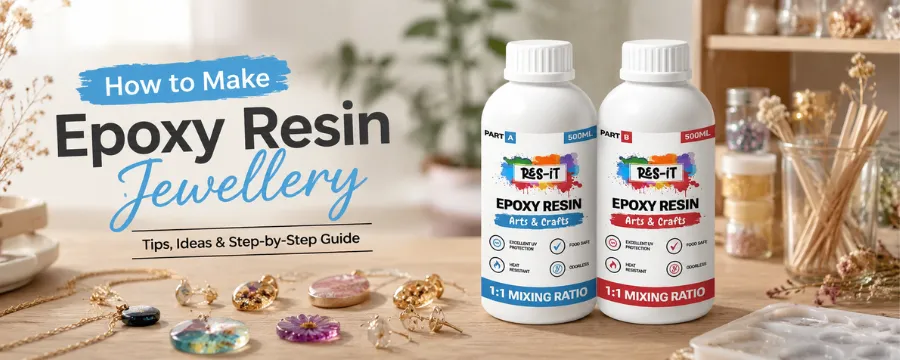
How to Make Epoxy Resin Jewellery
Resin jewellery has become one of the fastest-growing categories in the handmade craft market. From elegant pendants and statement earrings to personalised keepsakes, epoxy resin allows makers to create unique designs that cannot be replicated through traditional jewellery-making methods.
Whether you're new to resin jewellery making or looking to improve the quality of your creations, understanding the correct materials, techniques, and finishing methods is essential. Small imperfections that might go unnoticed in larger resin projects can become highly visible in jewellery, making precision and preparation particularly important.
This guide explores how to create professional-quality epoxy resin jewellery, common mistakes to avoid, and creative design ideas that can help your handmade pieces stand out.
Why Epoxy Resin is Perfect for Jewellery Making
Epoxy resin is valued by jewellery makers because it combines durability, clarity, and design flexibility. Once fully cured, it creates a smooth, glass-like finish that can preserve colours, textures, and decorative inclusions for years.
Benefits of Epoxy Resin Jewellery
- Crystal-clear transparency
- Lightweight finished pieces
- High-gloss professional appearance
- Excellent durability
- Endless colour combinations
- Ability to preserve natural materials
- Suitable for custom and personalised designs
- Compatible with various jewellery molds
Unlike mass-produced accessories, handmade resin jewellery offers individuality, making every piece unique.
Essential Supplies for Resin Jewellery Making
Using quality materials is one of the biggest factors influencing the final result.
Core Materials
- Clear epoxy resin and hardener
- Silicone resin jewellery molds
- Measuring cups
- Mixing sticks
- Nitrile gloves
- Heat gun or torch
- Resin pigments
- Mica powders
- Metallic flakes
- Dried flowers
- Jewellery findings and hardware
Many experienced resin artists also keep dedicated tools for resin work to avoid contamination and achieve more consistent results.
Choosing the Right Resin for Jewellery
Not all epoxy resins are designed for jewellery applications.
When selecting a resin, look for:
- High clarity
- UV resistance
- Low viscosity
- Minimal yellowing over time
- Bubble-release properties
- Strong scratch resistance
A low-viscosity resin is often preferred because it flows easily into detailed molds and helps minimise trapped air bubbles.
Professional Preparation Before You Start
Prepare Your Workspace
Before mixing resin:
- Clean your work surface thoroughly
- Remove dust and debris
- Maintain a room temperature between 20°C and 25°C
- Organise all tools and materials
- Wear protective gloves
A clean environment significantly reduces contamination and surface imperfections.
Warm the Resin Bottles
One technique commonly used by professional makers is gently warming sealed resin bottles before mixing.
- Reduce viscosity
- Improve flow
- Help trapped air escape more easily
- Create clearer pours
Many creators place sealed bottles in warm water for 10–15 minutes before use.
Unique Epoxy Resin Jewellery Ideas
Botanical Resin Jewellery
Real flowers preserved in clear resin create timeless and elegant designs.
- Lavender
- Rose petals
- Baby's breath
- Fern leaves
- Forget-me-nots
Ocean-Inspired Jewellery
- Pearl pigments
- Crushed shells
- Fine sand
- Blue and turquoise colourants
- White wave effects
Luxury Metallic Jewellery
- Black resin with gold leaf
- Emerald resin with copper flakes
- Pearl white with silver accents
- Transparent resin with floating metallic elements
Personalised Memory Jewellery
- Wedding flowers
- Anniversary keepsakes
- Handwritten notes
- Fabric fragments
- Small personal mementos
Step-by-Step Resin Jewellery Process
1. Measure Accurately
Always follow the manufacturer's mixing ratio.
- Soft curing
- Sticky surfaces
- Cloudiness
- Reduced durability
2. Mix Slowly
- Fast stirring
- Whipping air into the mixture
- Scraping aggressively
3. Add Decorative Elements
- Pigments
- Glitter
- Metallic flakes
- Dried flowers
- Inclusions
4. Pour Into Molds
- Reduce trapped air
- Improve clarity
- Create smoother edges
5. Remove Surface Bubbles
- Allow resin to settle briefly
- Use a heat gun carefully
- Pass heat quickly across the surface
6. Allow Full Cure Time
- 24–48 hours for handling
- Up to 72 hours for a full cure
Common Resin Jewellery Mistakes
Using Wet Flowers
- Cloudiness
- Discolouration
- Bubble formation
Demolding Too Early
- Distortion
- Fingerprints
- Surface damage
Incorrect Mixing Ratios
Improper ratios are among the most common causes of failed resin projects.
Working in Cold Conditions
- Slow curing
- Increased bubbles
- Reduced clarity
How to Achieve Crystal-Clear Resin Jewellery
Best Practices
- Use quality resin
- Measure accurately
- Mix slowly
- Warm resin before use
- Work in a dust-free environment
- Protect curing pieces from debris
- Allow adequate curing time
Turning Resin Jewellery into a Small Business
- Handmade craftsmanship
- Personalisation options
- One-of-a-kind designs
- Preserved natural materials
- Custom colour combinations
Recommended Accessories for Resin Jewellery Projects
- Resin starter kits
- Nitrile gloves
- Mixing cups
- Silicone molds
- Pigment collections
- Precision measuring tools
Frequently Asked Questions
What type of epoxy resin is best for jewellery?
A clear, UV-resistant, low-viscosity epoxy resin designed for detailed casting projects is generally the best choice for jewellery making.
How long does epoxy resin jewellery take to cure?
Most jewellery-grade epoxy resins require between 24 and 72 hours for a complete cure.
Can dried flowers be used in resin jewellery?
Yes. Flowers must be completely dry before encapsulation.
Why does resin jewellery become cloudy?
Cloudiness is often caused by moisture, inaccurate mixing ratios, contamination, or trapped air bubbles.
How do you stop bubbles in resin jewellery?
Warm the resin before mixing, stir slowly, pour carefully, and use gentle heat to remove surface bubbles.
Final Thoughts
Epoxy resin jewellery combines creativity with craftsmanship, allowing makers to create distinctive accessories that cannot be duplicated. Whether you're preserving flowers, creating luxury metallic designs, or producing personalised keepsakes, success depends on using quality materials and following proven techniques.
By focusing on preparation, accurate mixing, and proper curing, you can create professional-quality handmade resin jewellery that looks beautiful, lasts for years, and stands out in an increasingly competitive handmade market.