Understanding the Shelf Life of Epoxy Resin
When you deal with epoxy resin, there is one question that is always asked:
Does epoxy resin expire?
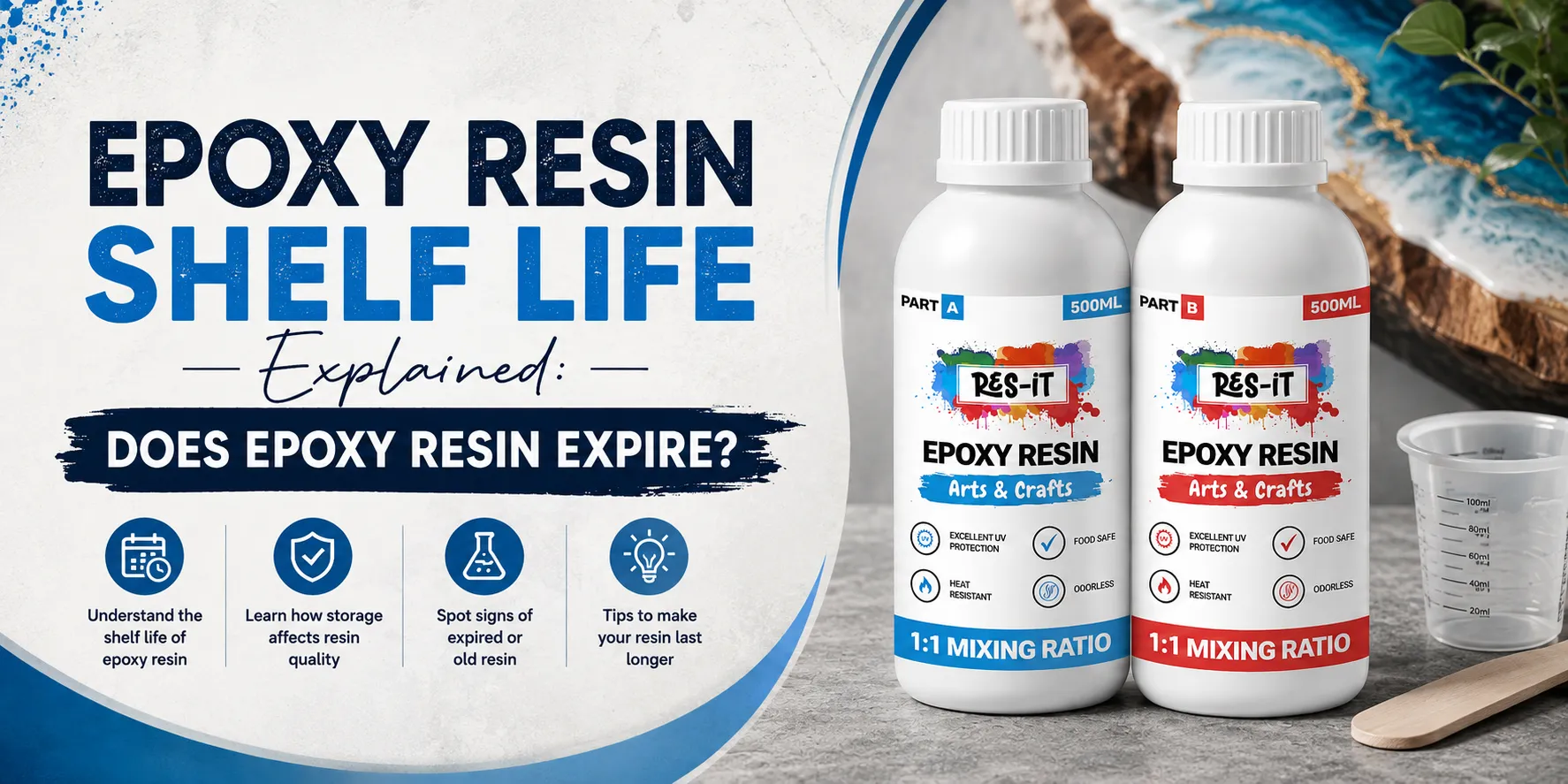
The answer to this is yes, epoxy resin has a shelf life, but not as a set expiry date. Various resin types have varying durability, and storing them in different ways can be very important.
This guide will inform you on the epoxy resin shelf life in simple terms, the difference between art & craft resin and deep pour resin, and give you tips on extending the life of your resin.

Res-iT Epoxy Resin 1L Starter Kit

Res-iT 2L Pro Epoxy Resin Kit
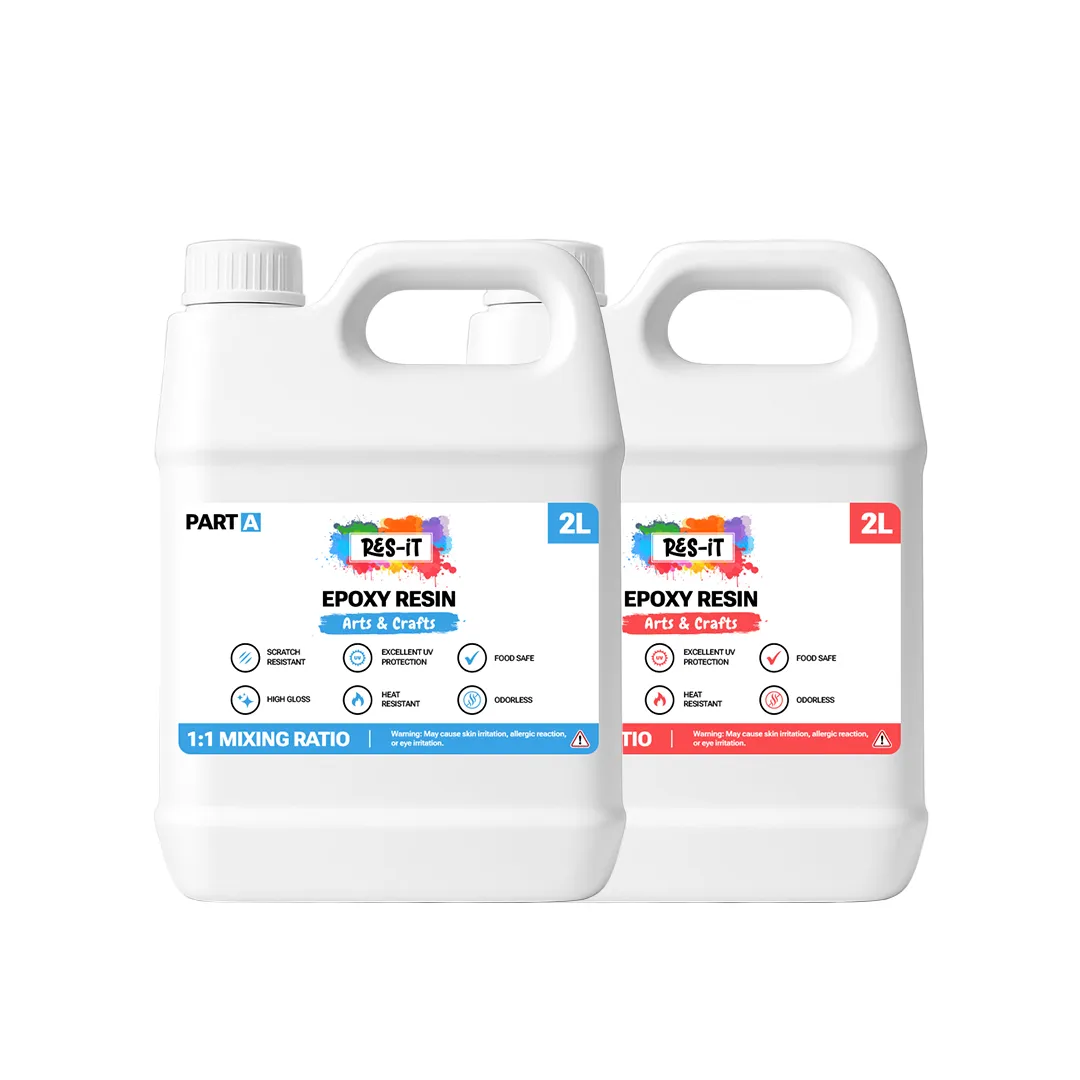
Res-iT Epoxy Resin 4L Pro Kit
What Is the Epoxy Resin Shelf Life?
Shelf life refers to the time span that epoxy resin remains in use whenever it has not been opened and kept in appropriate conditions.
Epoxy resin is typically available in two components:
- Part A: Resin
- Part B: Hardener
Both components may slowly evolve with time because of:
- Temperature
- Moisture
- Air exposure
- Chemical ageing
Although the resin might appear fine, old resin might not cure.
Key Takeaways
- Most unopened epoxy resin lasts between 12 and 24 months.
- Deep pour resin generally has a longer shelf life than art resin.
- Poor storage conditions can shorten epoxy resin lifespan.
- Crystallised resin can often be restored using warm water.
- Always test older resin before using it for important projects.
Art Resin vs Deep Pour Resin Shelf Life
| Feature | Art Resin | Deep Pour Resin |
|---|---|---|
| Average Shelf Life | 12–18 Months | 18–24 Months |
| Typical Use | Coasters and jewellery | River tables and casting |
| Curing Speed | Fast | Slow |
| Resistance to Crystallisation | Moderate | High |
Does Epoxy Resin Expire?
Epoxy resin does not go overnight; however, in the long run it may:
- Turn cloudy
- Thicken or crystallise
- Cure slowly or unevenly
- Lose strength or clarity
Yes, epoxy resin is subject to expiration, and this is mainly because it is kept in the wrong manner.
Average Shelf Life of Epoxy Resin
The following is the approximate shelf life of epoxy resin:
- Unopened epoxy resin: 12-24 months
- Opened epoxy resin: 6-12 months (when stored properly)
Always refer to the instructions of the manufacturer, because the formula differs.
Different Epoxy Resins Have Different Shelf Lives
Not every epoxy resin is identical one. The way they are formulated and the purpose they are meant to serve determine their shelf life.
Shelf Life of Art & Craft Epoxy Resin
The art and craft resin is intended to be used in:
- Coasters
- Jewellery
- Trays
- Small art projects
- Thin pours
Shelf life (average):
- Unopened: 12-18 months
- Opened: 6-12 months
Why it Expires Sooner:
- Formulas that are clearer are more sensitive
- Designed for fast curing
- Responds to changes in temperature
Signs Art Resin is Going Bad:
- Yellow tint
- Thick or syrup-like texture
- Bubbles that don't rise out
- Sticky surface after curing
Deep Pour Epoxy Resin Shelf Life
Deep pour resin is used for:
- River tables
- Thick moulds
- Large casting projects
Shelf life (average):
- Unopened: 18-24 months
- Opened: 12 months (other times even longer)
Why it Lasts Longer:
- Slower curing chemistry
- More stable formulation
- Constructed to manage heat more efficiently
Warning Signs:
- Crystallisation during cold storage
- Slow or incomplete curing
- Cloudy finish
Good news: deep pour resin can be frequently fixed provided that it is in crystallised form (more on that below).
What Would Happen in Case of Using Expired Epoxy Resin?
Expatriation of expired or old resin may result in:
- Resin not curing
- Sticky or soft surface
- Weak final product
- Cloudy or yellow finish
- Wasted time and materials
As regards business sellers, this may also refer to:
- Customer complaints
- Product returns
- Loss of trust
Epoxy Resin Can Be Spoiled and It Is Possible to Tell When This Occurs
Prior to the usage of old resin, examine the following signs:
Check the Resin (Part A)
- Is it very thick?
- Is it cloudy or yellow?
- Are there crystals?
Check the Hardener (Part B)
- Has it darkened?
- Is it stinking abnormally?
- Has it separated?
In case one side appears to be suspicious, test it on a small scale before completing a project.
Is it Possible to Cure Old or Crystallised Resin?
Sometimes, yes.
For Crystallised Resin:
- Put the bottle with a lid into the warm water (no boiling).
- Heat slowly until crystals are dissolved.
- Allow to cool down to room temperature.
Please do not heat the resin in the microwave or overheat. This technique is effective with deep pour resin and not necessarily with art resin.
The Best Epoxy Resin Storage Advice
The storage of your resin will be doubled.
Follow These Storage Rules:
- Store at 15-25°C (59-77°F)
- Keep bottles tightly sealed
- Store in a dry place
- Avoid direct sunlight
- Keep away from moisture
Pro Tip:
Contamination can be prevented by always washing the opening of the bottle prior to opening.
Should Old Resin Be Used on Important Projects?
For:
- Client orders
- Furniture
- Sale items
Always use fresh resin. Old resin can be used only for:
- Practice pours
- Test moulds
- Experiments
Epoxy Resin After 5 Years
Epoxy resin can remain strong and attractive for many years when it is mixed, cured, and maintained correctly. After five years, the condition of a resin project will mainly depend on its quality, exposure to sunlight, heat, moisture, and everyday use.
Appearance After 5 Years
Over time, epoxy resin may develop slight changes in appearance. Clear resin can gradually become warmer or more amber in colour, especially when exposed to direct sunlight. The surface may also lose some of its original gloss or develop minor scratches from regular use.
Durability and Performance
Properly cured epoxy resin can remain durable after five years. Indoor projects that are protected from excessive heat, prolonged UV exposure, and harsh chemicals can continue to perform well for many years.
Maintaining Epoxy Resin Over Time
- Keep resin surfaces away from prolonged direct sunlight where possible.
- Avoid placing extremely hot items directly on the surface.
- Clean with a soft cloth and a mild cleaning solution.
- Avoid abrasive cleaners that can scratch the finish.
- Follow suitable care instructions for the specific resin project.
With proper care, epoxy resin does not simply stop working after five years. Many finished resin projects can continue to look attractive and remain functional well beyond this point.
FAQs
How long can you store epoxy resin?
Epoxy resin is typically stable at 12 to 24 months, depending on the brand, and the epoxy is not opened. When opened, the product is to be consumed in 6-12 months in a cool, dry area with the bottle securely closed to maintain freshness.
How long does an epoxy resin floor last?
An epoxy resin floor properly applied may last between 10 to 20 years, depending on the level of foot traffic and its maintenance. Frequent cleaning and using less harsh chemicals will ensure that the floor remains firm and shiny over the years.
How long does epoxy last outside?
Outdoor epoxy has a typical life of between 5 and 10 years, although it may be shortened by the sun, rain, and temperature variation. Maintenance and application of UV-resistant coats can substantially increase their longevity.
Can epoxy resin last for years?
Yes, properly stored epoxy resin can remain usable for years if kept in a cool, dry place.
Can old epoxy resin still be used?
Older resin may still work, but it should always be tested before being used on important projects.
Why has my epoxy resin turned cloudy?
Cloudiness is often caused by moisture, temperature fluctuations, or ageing.
Final Thoughts
So, does epoxy resin expire? Yes, but its lifespan depends heavily on how it is stored and the type of resin you use.
Key takeaway:
- The shelf life of art & craft resin is lower.
- Deep pour resin lasts longer.
- Storage is more important than dates.
Take care of your resin and it will give you high-quality, strong, professional results.