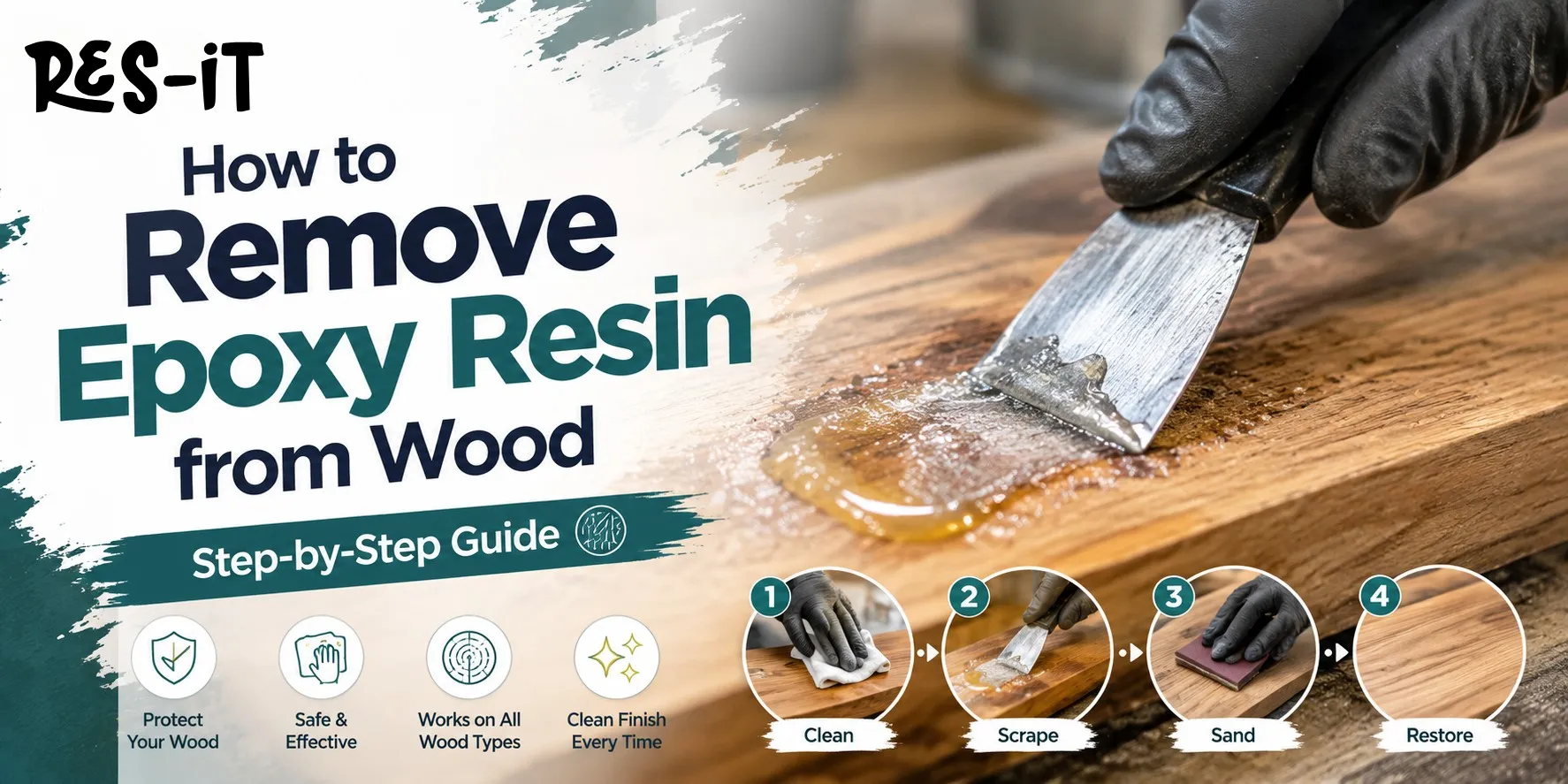
How to Remove Epoxy Resin from Wood: A Complete Step-by-Step Guide
Epoxy resin is an excellent material for woodworking, furniture projects, resin art and DIY crafts, but removing it from wood can become a challenge when resin spills, drips or cures in the wrong place. Whether you have accidentally spilled epoxy on a wooden workbench, removed an old resin coating, or need to clean a resin spill from a table, choosing the correct removal method can help protect the wood underneath.
The best way to remove epoxy resin from wood depends mainly on whether the resin is still wet, partially cured or fully cured. Fresh epoxy can often be cleaned before it hardens, while cured epoxy usually requires careful mechanical removal such as scraping and sanding. Heat can sometimes help loosen or soften cured resin, but it must be used carefully because excessive heat can damage wood and its finish.
In this guide, we explain how to remove epoxy resin from wood safely and effectively, including what to do with fresh spills, how to remove cured epoxy, when sanding is useful, whether acetone works, and how to restore the wooden surface after the resin has been removed.

Res-iT 2L Pro Epoxy Resin Kit

Res-iT Epoxy Resin 1L Starter Kit

Res-iT Epoxy Resin 480ml Starter Kit
How Do You Remove Epoxy Resin from Wood?
The simplest method depends on the condition of the resin. If the epoxy is still wet or uncured, remove as much of it as possible with disposable material and then clean the remaining residue using a suitable solvent recommended for your specific epoxy system. Always follow the resin manufacturer's safety instructions and test any cleaner on an inconspicuous area first.
If the epoxy has fully cured, mechanical removal is normally the most practical approach. Carefully lift thicker resin from the surface with a suitable scraper and then sand away remaining residue gradually. Fully cured epoxy is highly resistant to ordinary solvents, so trying to dissolve a thick cured layer is usually less effective than physically removing it.
Why Is Epoxy Resin So Difficult to Remove from Wood?
Epoxy resin is designed to create a strong, durable material after the resin and hardener react. Once fully cured, it becomes a hard thermoset material rather than something that simply melts or washes away.
Wood makes the problem more complicated because it is porous. Liquid resin can move into small pores, grain lines and imperfections before curing. This means that removing the visible surface layer may not always remove every trace of resin from the wood.
The type of wood also matters. A thick hardwood tabletop can tolerate more controlled mechanical work than a thin veneer or a soft decorative surface. Finished, stained or painted wood also requires additional care because the removal process may affect the existing finish.
Can You Remove Epoxy Resin from Wood After It Has Cured?
Yes, cured epoxy can often be removed from a wooden surface, but the process is more difficult than removing fresh resin. Fully cured epoxy is generally removed mechanically rather than simply dissolved.
For small spills, controlled scraping followed by careful sanding can be enough. For large areas, more substantial woodworking equipment may be required, especially when a thick resin layer has bonded strongly to the surface.
If the wood is valuable, antique, veneered or difficult to replace, consider getting help from an experienced woodworker or refinishing professional rather than aggressively removing the resin yourself.
How to Remove Uncured Epoxy Resin from Wood
Fresh epoxy is normally much easier to deal with than cured resin. The priority is to remove the bulk of the spill before it begins to harden.
Step 1: Protect Yourself and the Work Area
Wear appropriate protective gloves and eye protection and work according to the safety instructions supplied with your particular epoxy resin. Ensure the area has suitable ventilation.
Step 2: Remove the Excess Resin
Carefully lift or wipe away as much uncured resin as possible without spreading it across a larger area. Use disposable materials that can be safely discarded according to the manufacturer's instructions.
Step 3: Clean the Remaining Residue
For a small amount of uncured residue, use a cleaning method approved by the epoxy manufacturer's instructions. Some epoxy systems recommend isopropyl alcohol for removing fresh residue, while others may specify a different cleaner.
Never assume that a solvent is safe for every wooden finish. Test it first on a hidden section of the same material.
Step 4: Allow the Wood to Dry
After cleaning, allow the wood to dry completely before sanding, staining, painting or applying another coating.
Manufacturer guidance confirms that uncured epoxy can generally be cleaned more easily than cured material, while fully cured epoxy usually requires mechanical removal. :contentReference[oaicite:2]{index=2}
How to Remove Cured Epoxy from Wood
Removing cured epoxy requires patience. The goal is to remove the resin without removing unnecessary amounts of the wood underneath.
Step 1: Secure the Wooden Surface
Place the wooden item on a stable work surface so that it cannot move unexpectedly while you work.
Step 2: Remove Thick Resin Carefully
If there is a raised lump or thick layer of cured epoxy, carefully work at the edge with an appropriate scraper. Keep the tool under control and avoid forcing it into the wood.
Work gradually rather than attempting to remove a large amount of resin in one aggressive movement. This is particularly important on softwood and veneered surfaces.
Step 3: Sand the Remaining Resin
Once the majority of the epoxy has been removed, sanding can help eliminate thin remaining patches. Begin with an appropriate grit for the condition of the surface and progress gradually to finer abrasives as the wood becomes smoother.
Step 4: Inspect the Grain
Stop regularly and inspect the wood. If resin has penetrated into the grain, removing every trace may require removing some of the affected surface material.
Fully cured epoxy is normally removed by sanding, scraping or other controlled mechanical techniques rather than ordinary household cleaning. :contentReference[oaicite:3]{index=3}
How to Remove Epoxy Resin from a Wood Table
Wooden tables are one of the most common places for accidental epoxy spills. The correct approach depends on the size and thickness of the resin spill and whether the table has already been finished.
For a small fresh spill, remove the excess immediately and clean the remaining residue using a compatible method recommended for your epoxy system. For cured drips, carefully scrape away the raised resin and then sand the affected area.
If the spill covers a large section of a finished table, avoid aggressive sanding straight away. You may remove the table's finish and create a visible low spot. In this situation, gradual removal and surface assessment are much safer.
How to Remove Epoxy from Wood Without Sanding
If you want to avoid sanding, the options are limited once the epoxy has fully cured. Mechanical scraping can remove raised epoxy without immediately sanding the entire area.
Heat may also help in some situations by changing the physical properties of the cured epoxy, making it easier to work mechanically. However, heat should be used cautiously and according to the resin manufacturer's guidance because wood can scorch, discolor, warp or otherwise become damaged.
For delicate wood, veneer or finished furniture, do not rely on aggressive heat or force. A controlled approach is more important than removing the resin quickly.
Can Acetone Remove Epoxy Resin from Wood?
Acetone may help with some fresh or uncured epoxy residues, but it is generally not an effective solution for a thick layer of fully cured epoxy.
More importantly, acetone and other strong solvents can affect wood finishes, coatings, stains and some plastics. Always check the epoxy manufacturer's instructions and the finish manufacturer's guidance before applying a solvent.
For cured epoxy, mechanical removal is usually the more practical approach. Specialist resin-removal guidance also warns that strong solvents can damage or discolour wooden surfaces and recommends controlled physical removal instead. :contentReference[oaicite:4]{index=4}
Can You Sand Epoxy Resin Off Wood?
Yes. Sanding is one of the most useful methods for removing thin cured epoxy residue from wood. It is especially useful after the thicker resin has already been removed.
The key is to avoid sanding aggressively into the wood. Start by removing the resin carefully and use sanding to refine the remaining area rather than trying to grind through a thick resin layer immediately.
As you approach the wood, use progressively finer abrasive grades to achieve a smoother transition. Always remove sanding dust before applying a new finish.
Does Heat Help Remove Cured Epoxy from Wood?
Heat can sometimes make cured epoxy easier to work with, but it is not a universal solution. The behaviour of epoxy under heat depends on the resin formulation and its condition.
If heat is used, it should be controlled carefully and kept moving rather than concentrated in one location. Excessive heat can scorch wood, damage coatings or cause other unwanted changes to the surface.
Always follow the manufacturer's technical and safety information for the specific epoxy product before applying heat.
How to Remove Epoxy from Wood Without Damaging the Wood
Protecting the wood should be the main priority during epoxy removal. The following principles can help reduce unnecessary damage:
- Identify whether the epoxy is wet, partially cured or fully cured.
- Remove thick resin gradually instead of forcing a tool underneath it.
- Use controlled pressure when scraping.
- Sand only as much as necessary.
- Follow the direction of the wood grain when appropriate.
- Test cleaners or solvents on an inconspicuous area first.
- Take extra care with veneer, stained wood and finished furniture.
- Stop if the wood begins to show signs of damage.
Careful preparation is particularly important because complete removal may require removing a small amount of the underlying material when epoxy has penetrated the substrate. :contentReference[oaicite:5]{index=5}
Common Mistakes When Removing Epoxy Resin from Wood
1. Waiting Until the Resin Is Fully Cured
If you notice a spill while the resin is still fresh, dealing with it promptly is usually easier than allowing it to become a hard bonded layer.
2. Using Too Much Force
Aggressive scraping can gouge the wood. Work gradually and let the tool remove the resin rather than forcing it deeply into the surface.
3. Sanding Too Deeply
Excessive sanding can create a depression that becomes visible after staining or applying a new finish.
4. Using the Wrong Solvent
A solvent that affects epoxy can also affect the wood finish. Always check compatibility before applying any chemical cleaner.
5. Applying Excessive Heat
Heat should never be treated as a shortcut. Excessive or concentrated heat can damage wood and coatings.
What to Do After Removing Epoxy Resin from Wood
Once the resin has been removed, inspect the entire affected area carefully. Remove dust and loose particles before deciding whether the wood needs refinishing.
If sanding has exposed unfinished wood, the area may need to be blended with the surrounding surface. Depending on the project, this could involve sanding, staining, sealing or applying a suitable protective finish.
Always allow any cleaning product or solvent to evaporate completely before applying a new coating, and follow the coating manufacturer's instructions for surface preparation.
How to Prevent Epoxy Resin Spills on Wood
Prevention is much easier than removing cured epoxy. Before starting your next resin project, protect your workspace with an appropriate disposable covering or resin-safe work surface.
Keep your mixing containers stable and avoid filling them beyond a comfortable working level. When transferring resin, pour slowly and keep the container close to the receiving surface to reduce accidental splashes.
Preparing the workspace before mixing can save significant time later and reduce the risk of resin reaching furniture, floors and untreated wooden surfaces.
Best Epoxy Resin Removal Method by Situation
| Situation | Recommended Approach | Main Consideration |
|---|---|---|
| Fresh epoxy spill | Remove excess and clean according to resin instructions | Act before curing |
| Partially cured resin | Careful removal followed by compatible cleaning | Avoid spreading the resin |
| Small cured drip | Controlled scraping and light sanding | Protect the wood underneath |
| Thin cured residue | Progressive sanding | Avoid creating a low spot |
| Large cured coating | Professional or controlled mechanical removal | Wood may also be removed |
| Delicate veneer | Gentle, controlled removal | Avoid aggressive sanding and heat |
Frequently Asked Questions About Removing Epoxy Resin from Wood
Can you remove dried epoxy from wood?
Yes, dried or fully cured epoxy can often be removed from wood, but it normally requires mechanical techniques such as careful scraping and sanding. The more strongly the epoxy has bonded or penetrated the wood, the more difficult complete removal becomes.
What is the easiest way to remove epoxy from wood?
For fresh epoxy, prompt cleanup is generally easiest. For cured epoxy, carefully removing the bulk of the resin mechanically and then sanding the remaining residue is usually more practical than trying to dissolve it.
Will vinegar remove epoxy resin from wood?
Vinegar should not be relied upon to remove fully cured epoxy. Cured epoxy is resistant to many ordinary household solvents and cleaners, so mechanical removal is generally more dependable.
Does rubbing alcohol remove epoxy from wood?
Rubbing alcohol may help clean certain fresh or uncured epoxy residues when compatible with the product and surface. It is not a reliable method for removing thick, fully cured epoxy.
Can epoxy be removed from a wooden table?
Yes, but the method depends on whether the epoxy is fresh or cured and whether the table has a finish. Small cured drips can often be removed carefully, while larger areas may require more extensive mechanical work.
How do you remove epoxy resin from wood without scratching it?
Work slowly, use controlled pressure and avoid forcing a scraper into the wood. Remove thick resin gradually and use careful sanding for the remaining residue. Delicate or valuable surfaces may require professional restoration.
Can you sand cured epoxy resin off wood?
Yes. Sanding is commonly used to remove remaining cured epoxy, especially after thicker sections have been removed. Use gradual passes and avoid removing unnecessary wood.
Does acetone dissolve cured epoxy?
Acetone is not generally an effective solution for removing thick, fully cured epoxy. It may be useful for some fresh residues depending on the epoxy system, but solvents can also damage wood finishes and should be used cautiously.
How can I remove epoxy from wood without damaging the finish?
Start with the least aggressive suitable method. Avoid unnecessary heat, pressure and strong solvents, and test any cleaning product on a hidden area first. If the finish is valuable or difficult to reproduce, professional refinishing may be the safest choice.
Final Thoughts: The Best Way to Remove Epoxy Resin from Wood
Knowing how to remove epoxy resin from wood starts with identifying the condition of the resin. Fresh epoxy should be dealt with as soon as possible, while cured epoxy normally requires controlled mechanical removal.
For small cured spills, careful scraping followed by sanding can be an effective approach. For larger resin coatings or valuable wooden furniture, take extra care because removing the epoxy can also affect the wood or its finish.
Most importantly, avoid rushing the process. The safest removal method is usually the one that gives you the greatest control over how much material is removed. With proper preparation, patience and the right technique, many unwanted epoxy spills can be corrected without unnecessarily damaging the wooden surface.
For your next resin project, accurate measuring, careful mixing and a properly protected workspace can help prevent unwanted spills before they happen.